

TL;DR: Made to order sizing issues are real: around 52% of online apparel returns are due to poor fit, and many pieces never make it back into stock. By taking accurate home measurements, sharing honest fit preferences, and using a careful 5–6 week handcrafted workflow, we dramatically reduce sizing risks so your custom Swarna by Sangisathi outfit arrives close to perfect.
Made-to-Order, But Will It Fit Me?
Made to order sizing issues are often the first thing you think about when you see a beautiful custom blazer set or kaftan online. That quiet fear of “What if it doesn’t fit and I can’t return it?” can be strong enough to stop you from ordering at all.
You are not overreacting. According to the Podean Apparel eCommerce Report 2025, 38% of apparel returns are due to sizing or fit, and other studies push that number as high as 52%. Most of the time, the style is right; the fit is wrong.
Many of us carry memories of local tailors who mis-measured a blouse, or an online outfit that arrived too tight at the bust and strangely loose at the waist. With online tailoring without trial, that anxiety can feel even sharper, especially for big festive events or destination weddings.
At Swarna by Sangisathi, we create slow, handcrafted, karigar-made pieces. Our whole made-to-order model is built to minimise made to order sizing issues for modern women across India, the UK, US, Middle East, Europe, Australia, and beyond. We want the joy of wearing heritage craft to be stronger than the fear of poor fit.
So we’ll unpack why made to order sizing issues happen so often, why standard fixes fail, how our process is different, how to take measurements at home, and what kind of fit you can realistically expect when you skip a traditional trial session.
If blazer sets are on your wishlist, you can also explore our blazer set buying guide later for even more detailed fit and styling ideas.
What’s Really Behind Made to Order Sizing Issues?
Made to order sizing issues don’t happen because your body is “difficult”. They happen because most sizing systems try to squeeze millions of unique bodies into a few standard numbers, then hope for the best. That hope rarely holds up once the garment is actually on.
Every body is genuinely unique
Two women can share the same bust, waist, and hip numbers yet look completely different in the same outfit. One may have a fuller bust and shorter torso; another might have broader shoulders and a longer rise. Generic size charts simply can’t express all these nuances.
When brands treat a “Medium” as a fixed truth, they ignore how much shape matters. Fuller busts, petite heights, or curvier hips change how a blazer drapes, how a draped skirt falls, and how snug a kaftan feels around the shoulders. Made to order sizing issues often start right there.
How self-measurements go wrong
Even when you give exact numbers, small measuring mistakes can grow into made to order sizing issues. Tapes held too tight over the bust, measured over thick clothing, or placed at the wrong point on the waist can easily shift measurements by 2–4 cm.
Those few centimetres decide whether a zipper glides up smoothly or refuses to close. Bust, waist, and hip are the usual culprits, but shoulder width, armhole depth, and torso length matter just as much for blazer sets and saree-blazer combinations.
The emotional and environmental cost of poor fit
Industry analysis suggests 30–40% of fashion returns are driven by poor fit, according to expert overviews from Tellar. Rawshot data shows about 52% of online apparel returns cite fit, and one quarter never go back into stock.
That means your “almost right” outfit might end up in a landfill or deep-discount bin. For conscious luxury shoppers who care about craft and carbon footprint, made to order sizing issues feel even heavier. There is the disappointment before a festive event, and the guilt of waste.
For our international customers who can’t quickly drop by for alterations, that stress is doubled. Our goal at Swarna by Sangisathi is to respect both your emotions and the planet by reducing those preventable returns as much as possible.
Why Do So Many Online Custom Orders Misfit?
Many online tailoring without trial experiences misfire because the process is built for speed, not for real bodies. The system is often the problem, not your shape, your height, or your curves.
Where typical custom workflows fail
Most brands rely on a simple size chart and one or two questions about height. They rarely ask how you like your clothes to sit on the body, or if you prefer a snug waist but relaxed hip. That missing conversation is a major cause of made to order sizing issues.
Critical details like posture, shoulder slope, bust shape, and tummy fullness are often ignored. Yet these are exactly what decide how a blazer closes, how a jumpsuit falls through the torso, or how a saree blazer balances over a draped skirt.
Bracketing shows the system, not you, is broken
Because guidance is so vague, many shoppers “bracket”: ordering two or three sizes, keeping one, and sending the rest back. Easysize reports that in some segments, up to 40% of orders are returned, often because of this guesswork.
This behaviour is a loud signal that customers do not trust size charts. It is also proof that online tailoring without trial needs deeper, more personalised fit support instead of just more sizes and more return labels.
What happens when brands invest in better fit
Some brands are already proving how powerful better fit guidance can be. Outdoor label Wondery used Easysize’s Fit Quiz and cut returns by 31%, simply by asking smarter questions about body shape and fit preferences, according to the Wondery case study.
Data from Soulz and Prime AI shows fewer refunds when shoppers use intelligent size tools rather than guessing. As the SizeSense team puts it, “52% of fashion e-commerce orders are returned primarily due to poor fit. When you fix fit, you’re protecting margin and cutting waste together.”
So if you have worried, “Will custom outfit fit me, or will I be stuck with something unwearable?”, please know this: the old system was never built around you. At Swarna by Sangisathi, our made-to-order approach is.
How Do We Get Your Made-to-Order Fit Right?
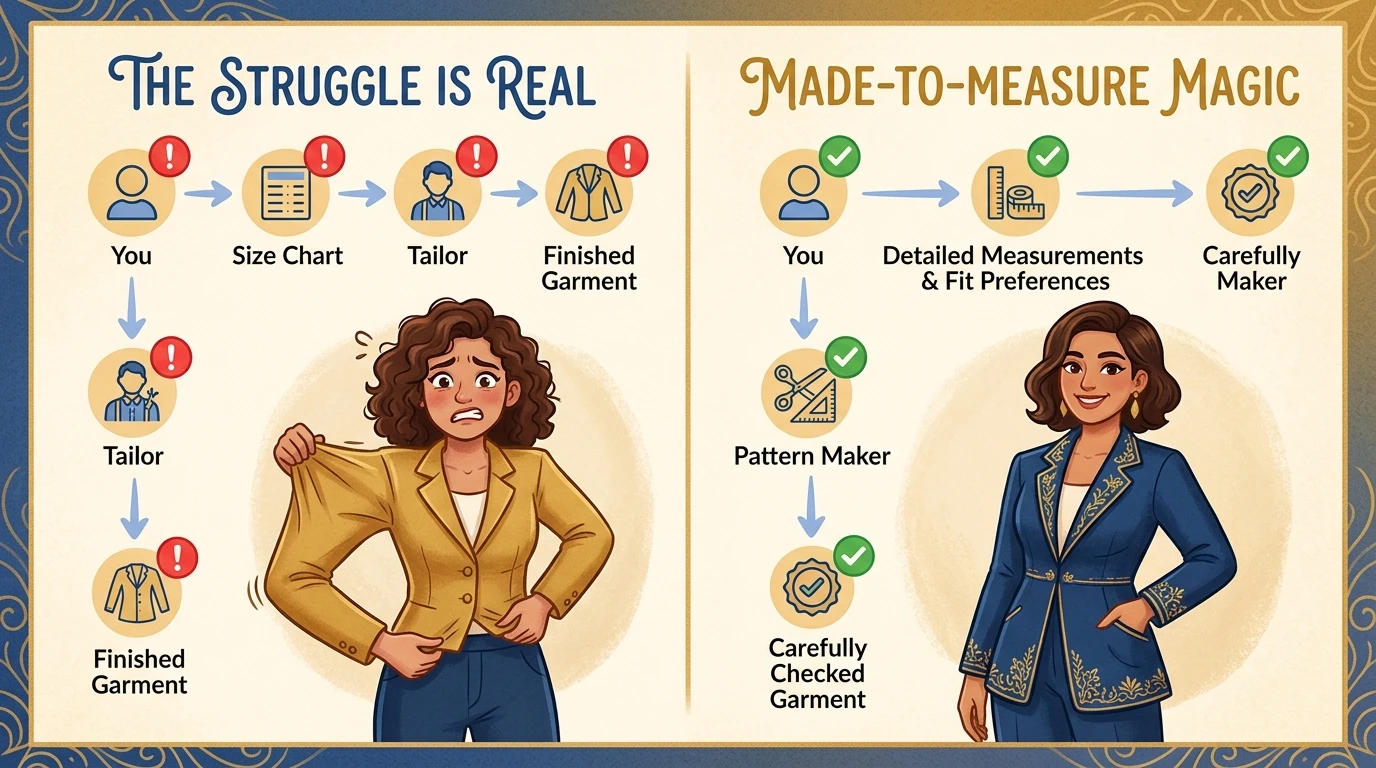
To reduce made to order sizing issues, we slow the process down and respect every measurement you share. Our entire made-to-order workflow is designed around your body, your comfort, and your real-life occasions.
Our made-to-order workflow, step by step
When you place a made-to-order request with us, we start with a detailed measurement and fit form. We often follow up if anything looks unusual, because we would rather ask one extra question than cut a blazer wrong.
Behind the scenes, we use internal pattern blocks built specifically for Indo-Western fusion silhouettes: blazer sets, draped skirts, kaftan sets, saree-blazer ensembles, and our Denim Divas pieces. Each category has its own base shapes and ease allowances, refined over many fittings.
How our karigars read your measurements
Our pattern cutters and karigars do more than copy numbers from a chart. They interpret. A fuller bust with a small waist means we add room in the front, shape the princess lines carefully, and keep the blazer nipping in without gaping.
Broad shoulders with narrower hips call for adjusted shoulder slopes and armhole curves, so the blazer or kaftan sits cleanly without pulling. This interpretation stage is where many made to order sizing issues are quietly prevented.
Silhouettes that forgive small variations
We also consciously design silhouettes that are both elevated and forgiving. Draped skirts, kaftan sets, denim dhoti-jacket combinations, and many of our blazer sets have elements like adjustable closures, wrap effects, or soft drapes that absorb tiny measurement variations.
Ultra-fitted gowns or bodycon dresses allow almost no alteration room and magnify every millimetre. Our pieces, from CHANDNI RAAT to our RANI sets, are tailored yet fluid, so small body fluctuations or minor self-measurement differences don’t instantly turn into made to order sizing issues.
Why 5–6 weeks actually improves your fit
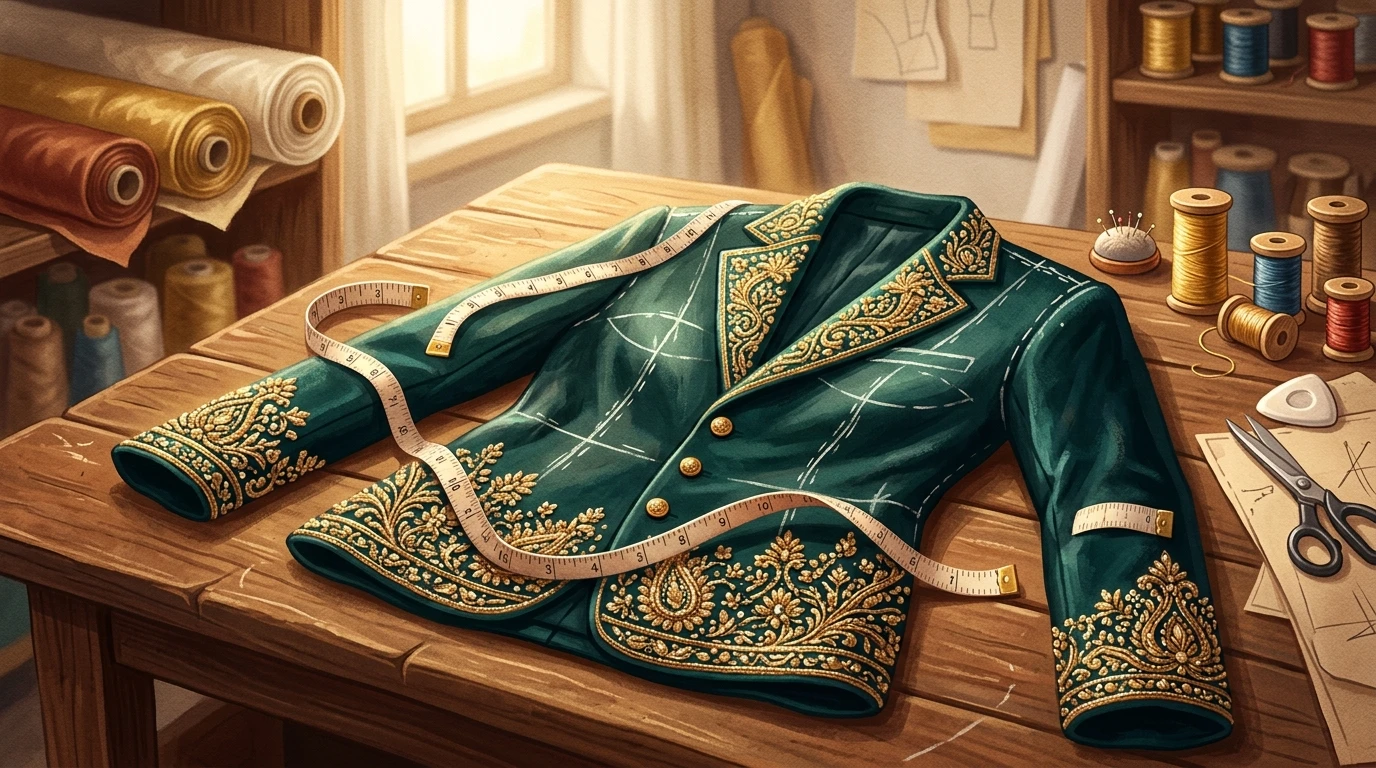
Our standard 5–6 week timeline might feel long if you are used to quick fashion, but that buffer is what protects your fit. It lets us cut fabric thoughtfully, plan Zardosi placement along your actual bust and waist levels, and perform interim checks.
Before dispatch, we double-check critical points like bust, waist, hip, shoulder width, and garment length against your measurements. This slower, craft-first pace is how we answer the question “Will custom outfit fit me?” with quiet confidence instead of nervous guesswork.
How to Take Measurements at Home (Step-by-Step)
When you are relying on online tailoring without trial, how to take measurements at home becomes your superpower. A calm, careful half hour with a tape measure can prevent most made to order sizing issues before they even start.
Tools and setup at home
Gather a soft measuring tape, a full-length mirror, and a notepad or phone. Wear a well-fitted, non-padded bra and either fitted clothing or a slip so the tape can sit close to the body without bulk.
If possible, ask a friend or family member to help, especially for shoulder width, back, and length measurements. For our customers in the UK, US, Middle East, Europe, and Australia, this careful setup replaces that quick trial you might usually have at a boutique.
- Soft, flexible measuring tape
- Mirror and good lighting
- Well-fitted, non-padded bra
- Fitted clothing or slip
- Helper if available, plus notes on usual heel height
Key body measurements, step by step
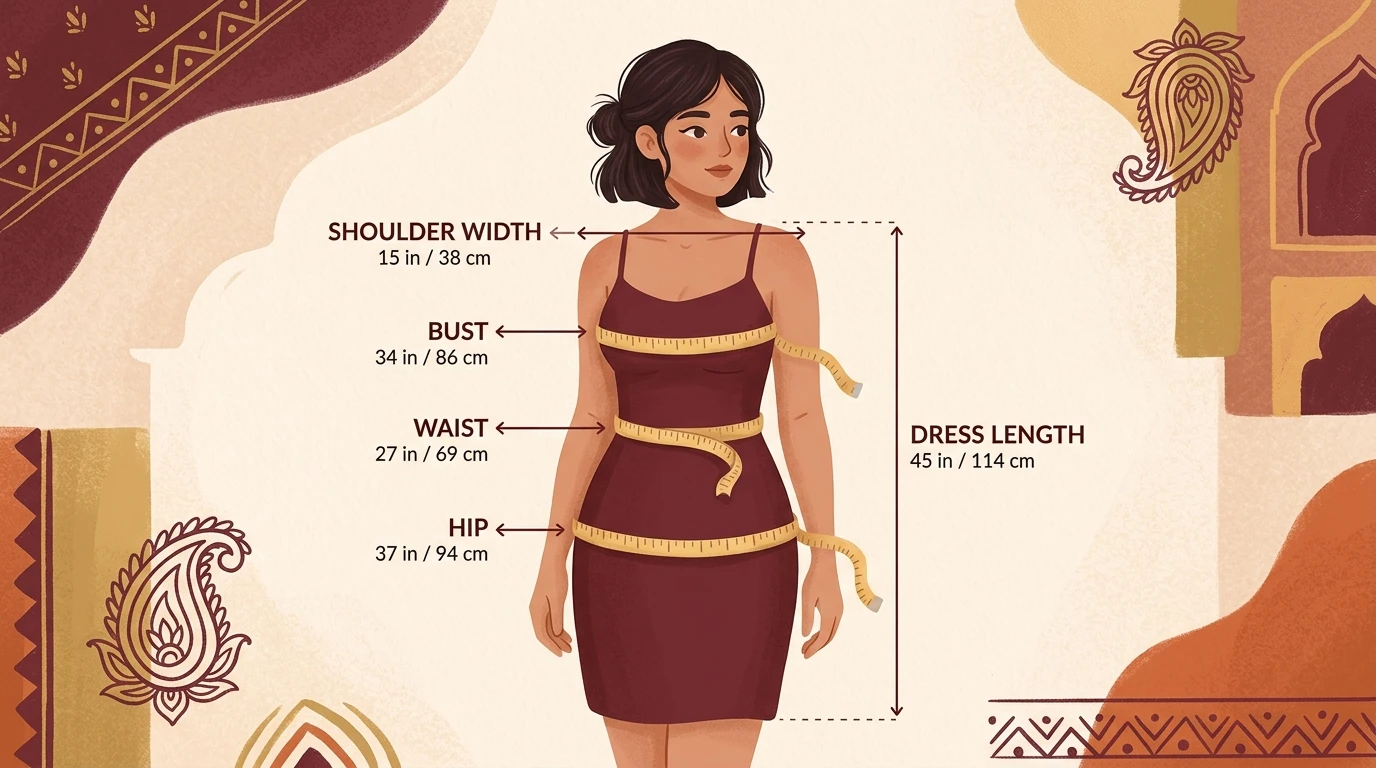
To truly minimise made to order sizing issues, we suggest taking a full set of measurements rather than only bust, waist, and hip. This gives our team a complete picture of your shape and posture.
Here is a simple sequence for how to take measurements at home:
- Bust: Around the fullest part, tape level across back, not too tight.
- Underbust: Directly under the bust, where your bra band sits.
- Natural waist: The narrowest point, usually above the navel.
- High hip and full hip: Around the top and fullest part of the hips.
- Shoulder width: Tip of one shoulder bone to the other across the back.
- Armhole and sleeve length: Around shoulder joint and from shoulder to wrist.
- Torso length and rise: Especially for jumpsuits and dhoti sets.
- Height and desired length: From shoulder to floor, and skirt or pant length with heel height noted.
Common measurement mistakes to avoid
Most made to order sizing issues from home measurements come from tiny, repeated errors. Pulling the tape too tight to “feel slimmer”, measuring over bulky clothes, rounding to the nearest whole number, or switching between inches and centimetres without realising can all distort the final garment.
Measure each area at least twice. Stand normally, do not hold your breath or suck in your stomach, and write down exactly what the tape says. Honest numbers plus honest fit preferences will always serve you better than “aspirational” measurements.
Extra details that really help our team
Beyond numbers, a few details dramatically improve our ability to prevent made to order sizing issues. Clear, modest photos from the front, side, and back help us understand posture, shoulder slope, and how your curves sit.
Let us know if you have a fuller bust, broad shoulders, a soft tummy, or a petite height. Tell us whether you prefer a snug, tailored shape or a relaxed, fluid drape through the waist and hip. Mention your usual bra style too, especially for blazer sets and Zardosi shirts.
- For fuller busts: share bust and high-bust measurements, plus bra style.
- For broad shoulders: shoulder width and comfortable armhole depth are vital.
- For petite heights: torso length, rise, and final garment length prevent overwhelm.
These details, combined with careful home measurements, turn online tailoring without trial into a thoughtful collaboration rather than a risky guess.
What Fit Results Can You Expect With Swarna?
With accurate measurements and clear fit preferences, most made-to-order Swarna pieces arrive very close to ideal. Minor tweaks like shortening a hem or adjusting the waist slightly may sometimes be needed, especially after long-distance travel.
Minor tweaks vs major changes
Simple adjustments are usually easy for a skilled local tailor. Length changes on draped skirts, palazzos, and trousers, small refinements at the waist or hip, or shortening straps and sleeves are all minor and rarely affect embroidery.
Once heavy Zardosi or handwork is placed, major bust alterations, drastically changing necklines, or significantly reshaping a blazer front are harder. That’s why we work so carefully upfront to avoid made to order sizing issues that would demand such extreme changes.
How we support you after delivery
If something feels slightly off, we’re here as partners. We can guide you on what a local tailor can safely adjust, and what should be left untouched to protect the embroidery and fabric.
Photos of you wearing the garment from the front, side, and back help us diagnose the issue. Then we can advise specific language to use with your tailor, like “take in 1 cm only at the side seam below the bust”, so the correction is precise.
Fit, loyalty, and conscious luxury
The SizeSense team found that customers are about 80% less likely to return after one positive fit experience, according to their returns report. Once your first Swarna piece fits well, future made-to-order decisions feel far less risky, even across borders.
That’s why we invest so much care into preventing made to order sizing issues from the start. Fewer returns mean less shipping, less waste, and a longer life for every karigar-made garment in your wardrobe. Your “Will custom outfit fit me?” question slowly turns into quiet, grounded trust.
If you’re drawn to versatile silhouettes, our adaptable blazer looks, like the ones featured in our blazer set styling case study, are especially friendly to small, local alterations if you ever need them.
Frequently Asked Questions
How can I avoid made to order sizing issues when ordering online?
You can avoid most made to order sizing issues by taking careful body measurements at home and sharing clear fit preferences. Use a soft tape, measure over fitted clothing, and record bust, waist, hip, shoulder, and length at least twice. Adding simple front/side/back photos and notes like “relaxed at the waist, snug at the bust” helps brands interpret your numbers accurately.
How to take measurements at home for a custom blazer set?
To measure at home for a blazer set, note your bust, underbust, natural waist, full hip, shoulder width, armhole, and sleeve length. Wear a well-fitted, non-padded bra and stand naturally while a helper reads the tape. Keep the tape level and neither tight nor loose. Sharing usual bra style and fit preference (fitted vs relaxed) further improves the result.
Will a custom outfit fit me without a trial session?
A custom outfit can fit very well without a trial if the brand uses detailed measurements and you communicate openly. Accurate numbers, body photos, and notes on areas like fuller bust, broad shoulders, or petite height allow pattern makers to shape the garment to you. Expect it to arrive close to ideal, with only minor local tweaks like hem length occasionally needed.
What are common mistakes that cause online tailoring without trial to misfit?
Common mistakes include measuring over bulky clothes, pulling the tape too tight, rounding numbers too much, and not mentioning bra type or preferred fit. Many brands also rely on basic size charts and skip questions about body shape. Combining careful home measurements with a brand that asks detailed fit questions greatly reduces misfit risk.
Which silhouettes are most forgiving if I’m anxious about sizing?
More forgiving silhouettes include draped skirts, kaftans, relaxed blazer sets, and soft denim dhoti or jumpsuit styles. These designs have drape, ease, or adjustable elements that absorb small measurement differences better than ultra-fitted gowns. They are ideal first choices if you’re nervous about sizing yet want to try a made-to-order handcrafted piece.
Ordering Without a Trial: Feel Confident in Your Fit
Ordering handcrafted clothing without trying it on does not have to feel like a gamble. Made to order sizing issues are real, but a mix of accurate home measurements, honest fit preferences, and slow, pattern-level care dramatically reduces the risk.
At Swarna by Sangisathi, our kaftan sets, draped skirts, saree-blazer ensembles, Denim Divas looks, and Zardosi shirts are designed to flatter real bodies and move with you through weddings, festivals, and long evenings. These silhouettes are more forgiving than ultra-fitted gowns, while still feeling luxurious and intentional.
Your next step is simple: find a quiet half hour, pick up a measuring tape, and follow the home-measurement checklist. Share your numbers, photos, and fit notes with us before you place your made-to-order request, whether you live in India or across the world.
When you’re ready to explore pieces that balance craft and comfort, you can browse styling inspiration in our blazer set styling guide and start imagining how they’ll move on your body. Then visit Swarna by Sangisathi, choose the silhouette that feels like you, and let our karigars craft a piece that honours both your heritage and your unique shape.