

TL;DR: This blazer set styling case study follows one handcrafted Noor blazer set worn to three occasions, cutting outfit purchases by two-thirds. With the average garment worn just 7 times before being discarded, planning rewears matters. By switching jewellery, hair, makeup and micro-styling, Priya proves a single luxe set can feel fresh, sustainable and cost-effective.
Can one blazer set truly do it all?
This blazer set styling case study follows Priya, who uses one handcrafted Indo-Western blazer set for a cousin’s sangeet, a friend’s cocktail, and an office Diwali — without feeling repetitive once. The answer is yes, one blazer set can do it all when you style it with intention.
Priya is 30, a strategy consultant based in Mumbai with regular trips to London. Her month is packed: a big fat family sangeet, a chic rooftop cocktail, and a “festive yet formal” office Diwali at her global firm.
Her wardrobe dilemma feels familiar. She wants different looks for every guest list (and every Instagram post), but she’s done with impulse festive buys that sit in the back of the closet. She also hates overstuffed suitcases on London flights.
Meanwhile, the numbers are brutal. According to industry analysis on outfit tracking, the average garment is worn just 7 times, and global consumers discard about 31.5 kg of clothing per person each year. Yet more than half of shoppers want to avoid one-hit outfits, says GWI’s fashion rental research.
Enter Swarna by Sangisathi and the Noor Halter Top Skirt And Blazer Set: a handcrafted, made-to-order hero that fuses tissue silk-inspired shimmer with modern tailoring. This blazer set styling case study shows exactly how Priya wore Noor three ways — full glam, cocktail chic, and office subtle — while feeling proud, not guilty, about repeating a handcrafted garment.
Before she ordered, she read the detailed blazer set buying guide to choose the right silhouette for her body and lifestyle, then committed to testing it across these three events.
Background & context: Who is our blazer set muse?
Priya is the kind of woman many of us recognise. She is 30, based in Mumbai, flying often to London and Dubai for client work, and constantly toggling between boardrooms, airport lounges and family WhatsApp groups about the next wedding.
Meet Priya, our modern muse
Her calendar is a swirl of cousins’ sangeets, college friends’ cocktails and office cultural days. She needs pieces that move easily from Andheri to Canary Wharf, from dance floors to presentations, without looking like fast fashion.
Priya also has a big extended family. That means many overlapping functions, the same relatives at multiple events, and constant photos circulating online. Her outfits are always “seen” more than once, which makes her wary of anything that feels too trendy or loud.
What does Priya value?
Over the last few years, she’s shifted from panic festive shopping to a more intentional wardrobe. She cares about Indian heritage crafts, prefers to support karigars, and wants clothes that feel luxurious but don’t carry the guilt of being worn once and forgotten.
She has also been reading about sustainability. Ecothes notes that sustainable shoppers now focus on cost-per-wear, aiming to extend a garment’s life rather than chasing the cheapest price. That mindset resonated with her travel-heavy, event-heavy life.
Why Noor is her hero blazer set
When she discovered Swarna by Sangisathi, she loved the brand’s philosophy: luxury handcrafted fashion that honours age-old Indian techniques, from Zardosi to tissue silks, reimagined in modern silhouettes. The Noor Halter Top Skirt And Blazer Set instantly stood out as a potential hero piece.
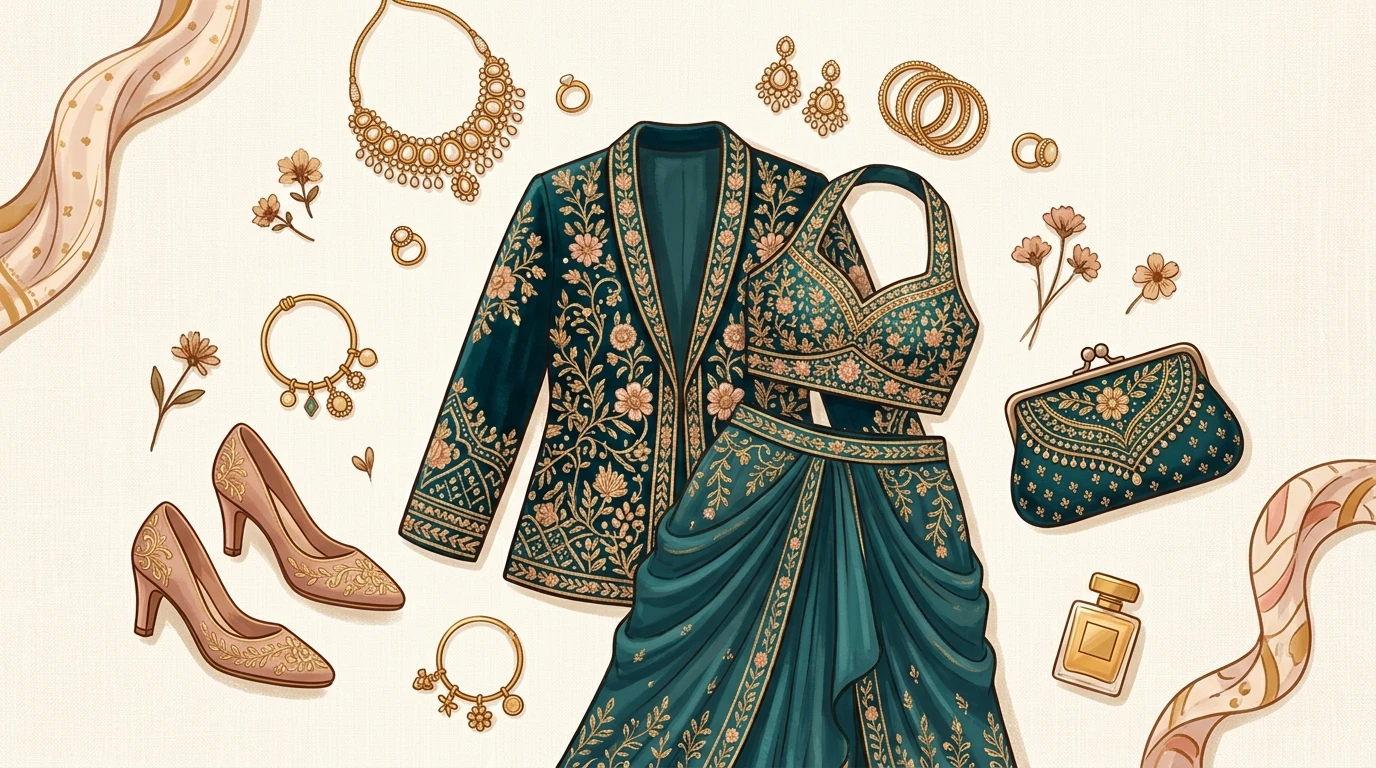
Imagine a softly gleaming base shade, intricate yet refined surface embroidery, a fluid draped skirt that nods to the saree, and a structured blazer that frames the shoulders beautifully. The halter blouse adds just the right touch of edge for a modern Indo-Western look.
Because every piece is made to order in 5–6 weeks and crafted by skilled karigars, Priya knew she was investing in something built to last. Global shipping to the UK, USA, Australia, the Middle East and Europe meant it would reach her even if she was mid-project abroad — perfect for international clients of Swarna by Sangisathi.
She decided Noor would be her signature luxury Indo-Western blazer set, and this blazer set styling case study would be her personal experiment in “use more, buy less”.
Why do festive outfits feel like ‘one-time’ wear?
Priya’s specific challenge was simple: three major occasions in one month, three different dress codes, three overlapping social circles. Her biggest fear? That someone would notice she’d repeated the same set and think she couldn’t afford or didn’t care to wear something new.
The social media pressure to look new
We’re living through 50+ micro-trends a year and constant outfit posting, as covered by Masala Thai’s sustainable style feature. Once a look has been photographed and shared, many people feel it has “served its purpose”.
Sustainable content creator Aparna Sharma puts it clearly: “Have you ever felt that someone will pass a snide remark if you repeat the same outfit regularly, or one that you’ve already posted? That mindset has to change if we want fashion to be a force for good.”
So when Priya asked herself, “Can I repeat festive outfits that are already on my grid?”, she was also bumping up against a wider cultural story about novelty and status.
From cost-per-purchase to cost-per-wear
Data shows the problem clearly. The average garment is worn just seven times, and global consumers discard around 31.5 kg of clothing per person each year, according to industry wardrobe-tracking data.
Yet GWI’s research on the fashion rental market shows that more than half of shoppers want to avoid one-hit-wonder outfits, especially for weddings and parties. Nearly 19% now use outfit-tracking apps, asking “How many ways can I wear this?” rather than “What can I buy next?”
Ecothes summarises the shift well: “Sustainable shoppers aren’t just buying ‘eco’ labels; they’re changing how they use their closets.” That’s exactly what Priya aimed for through this blazer set styling case study.
Fashion marketing strategist Kinjal Popat captures the new mood: “Normalize outfit repeating. Let’s make sustainability stylish.” Priya decided Noor would be her test case for turning that quote into reality.
How did one Noor blazer set become three completely different looks?
The heart of this blazer set styling case study is simple: keep the Noor blazer, halter blouse and draped skirt constant, and transform everything else. By pulling five styling levers — jewellery, hair, makeup, shoes and micro-styling — Priya created three distinct moods.
Instead of buying three separate mid-range outfits, she invested once in a handcrafted hero set from Swarna by Sangisathi and built a small accessory capsule around it. That aligns with circular fashion trends highlighted by Future Market Insights, which shows that hero pieces work best for repeated styling, rental and even resale.
For Noor, her plan looked like this:
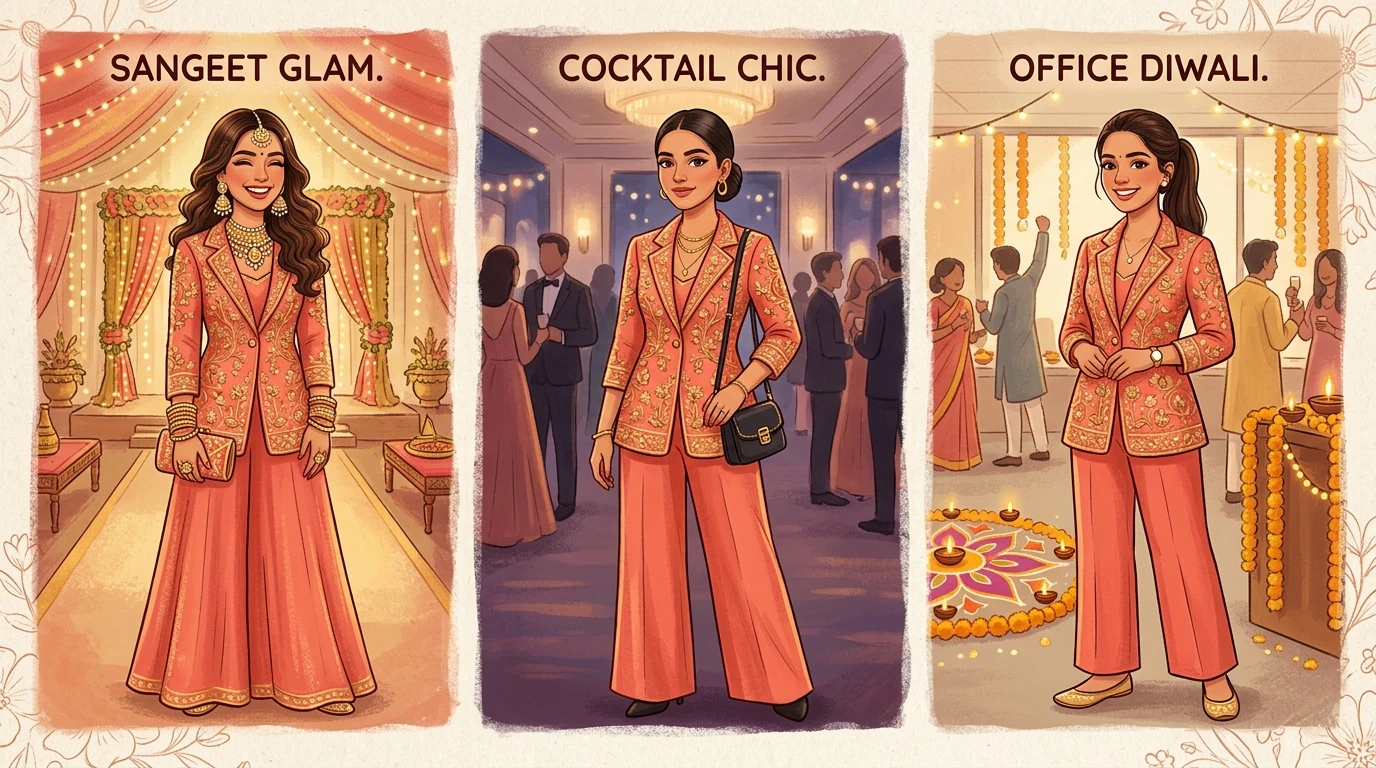
- Look 1: Full-glam cousin’s sangeet in Mumbai
- Look 2: Toned-down but chic cocktail at a rooftop bar
- Look 3: Elegant, subtle office Diwali at her global consulting firm
Each look would answer a different styling problem, from “wedding guest outfit rewear ideas” to “how to restyle a blazer set for work”. The following sections break down exactly what changed — and what stayed the same.
How to style a blazer set for a full-glam sangeet night?
For the cousin’s sangeet in Mumbai, the brief was clear: bring the drama. Priya wanted Noor to feel as special as a lehenga without being yet another traditional set she’d feel shy to repeat. This first look became the “wedding” chapter of her blazer set styling case study.
Jewellery and accessories for sangeet glam
Priya leaned fully into heritage jewellery. She paired Noor with a heavy Kundan or polki choker, matching statement earrings and stacked kadas. For the final touch, she added a delicate maang tikka, instantly pushing the look into high-festive territory.
Her accessories pulled everything together:
- Embroidered heels or embellished wedges
- A richly worked potli bag with metallic thread
- A sheer tissue or organza dupatta, lightly pinned at one shoulder
The dupatta echoed classic sangeet silhouettes while still letting the blazer remain the hero.
Hair, makeup and overall vibe
To balance the strong neckline of the halter blouse, Priya chose voluminous soft curls with a side part. This framed her face and let the jewellery shine without feeling overwhelming.
Her makeup followed the lights of a big Mumbai sangeet: bronze shimmer eyeshadow, kohl-rimmed eyes, glowing highlighter on the high points of her face, and a deep berry lip. The Noor set’s embroidery caught the light beautifully on the dance floor.
Micro-styling the Noor blazer, blouse and skirt
For this first outing, Priya wore the halter blouse exactly as designed, showcasing the neckline. She let the draped skirt fall a bit more fluid and dramatic, almost like a lehenga-meets-saree hybrid.
The blazer was often worn off-shoulder or draped over one arm. This allowed her jewellery and blouse to be visible, while the blazer still added structure and shimmer. Anyone seeking wedding guest outfit rewear ideas could copy this “maximum glam” version as the first stop for their own hero set.
How to restyle a blazer set for a chic cocktail party
Two weeks later, Priya needed to know exactly how to restyle a blazer set for a friend’s cocktail party at a rooftop bar. The vibe was modern and dressy, with a mixed guest list of Indian and international friends — less overtly traditional, more “editorial evening”.
Dialling down the drama for cocktails
Out went the heavy Kundan, in came sleek minimalism. Priya swapped her jewellery for sculptural gold hoops and a single statement ring, skipping both maang tikka and bangles. Noor instantly shifted from wedding glam to refined, city-ready elegance.
Her shoes changed, too. She chose metallic strappy sandals and carried a structured black or metallic clutch. These simple tweaks showed exactly how a single set can cross over from family function to cosmopolitan drinks.
Smart tweaks that transform the same set
This was the look where micro-styling did the heavy lifting. Priya wore the blazer on her shoulders like a cape, giving the outfit a fashion-editor edge. She re-pinned the draped skirt slightly narrower, so the silhouette felt more streamlined than the sangeet version.
Makeup shifted to “soft glam”: a sleek low ponytail, softly smoked eyeliner, champagne shimmer on the lids, and a muted rose lip. The halter’s back-tie detail peeked from under the blazer, adding quiet drama without shouting “festive”. This chapter of the blazer set styling case study proved that the same Noor set can pass as a sophisticated cocktail outfit in any global city.
Can I repeat festive outfits for an office Diwali and still look professional?
Yes, you absolutely can repeat festive outfits for office Diwali — especially when they’re thoughtfully handcrafted and styled with restraint. Priya’s third look with Noor answered this question for her Mumbai office and for colleagues dialling in from London and New York.
Answering ‘can I repeat festive outfits?’ at work
Her consulting firm’s dress code for Diwali was “festive but work-appropriate”. There was a pooja and team lunch, but also client calls and hybrid meetings.
Priya kept her jewellery minimal: delicate studs or tiny jhumkas, a slim bracelet or watch, and a fine pendant if the neckline allowed. No heavy bangles, no maang tikka — subtler choices that still honoured the day.
Keeping the Noor set office-appropriate
Styling-wise, she buttoned the blazer fully so it behaved like a tailored top. The halter blouse became a subtle inner layer, adding depth without screaming “party”. She pinned the draped skirt a touch higher and more secure, making it easy to move between desks and meeting rooms.
Her hair was a smooth low ponytail, her makeup clean and fresh: soft brown liner, mascara, a hint of blush, and a soft peach lip. On video calls with London and Middle East teams, Noor read as a sophisticated fusion of blazer and saree-inspired drape — not as a repeated party outfit.
For very corporate international settings, she knew she could always add sheer nude stockings and closed-toe block heels. This final look in the blazer set styling case study proved that rewearing isn’t just acceptable at work; done well, it actually signals confidence and intentional style.
What results did Priya see from repeating one handcrafted blazer set?
The “results” chapter of our blazer set styling case study is where everything clicks. Across all three events, Priya received more compliments than questions — and not a single negative remark about repeating Noor.
Cost-per-wear: the real comparison
Let’s run a simple illustration. Imagine Noor is around ₹35,000 as a handcrafted, made-to-order set from Swarna by Sangisathi. The old pattern might have been three separate festive outfits at ~₹12,000 each — about ₹36,000 total — each worn once.
With Noor, the maths changes quickly:
- 3 wears (sangeet, cocktail, office Diwali): ~₹11,670 per wear
- 6 wears (add a mehendi and two future Diwalis): ~₹5,830 per wear
- 10 wears (include receptions, travel weddings, Eid or milestone birthdays): ₹3,500 per wear
Compare that to three “one and done” outfits that never drop below their original cost-per-wear. Noor wins easily.
Emotional and sustainability wins
Beyond numbers, the emotional ROI was big. At the sangeet, relatives assumed Noor was a custom lehenga set. At the cocktail, non-Indian guests asked which designer had made her blazer dress. At the office Diwali, colleagues praised how polished yet festive she looked.
On the sustainability side, she felt aligned with the global shift towards circular fashion. Ecothes notes that circular models like resale and rental could represent a US$700 billion opportunity by 2030. Owning one versatile hero piece, and wearing it 10–15 times, is the personal equivalent of that macro-trend.
What are the key style lessons from this blazer set styling case study?
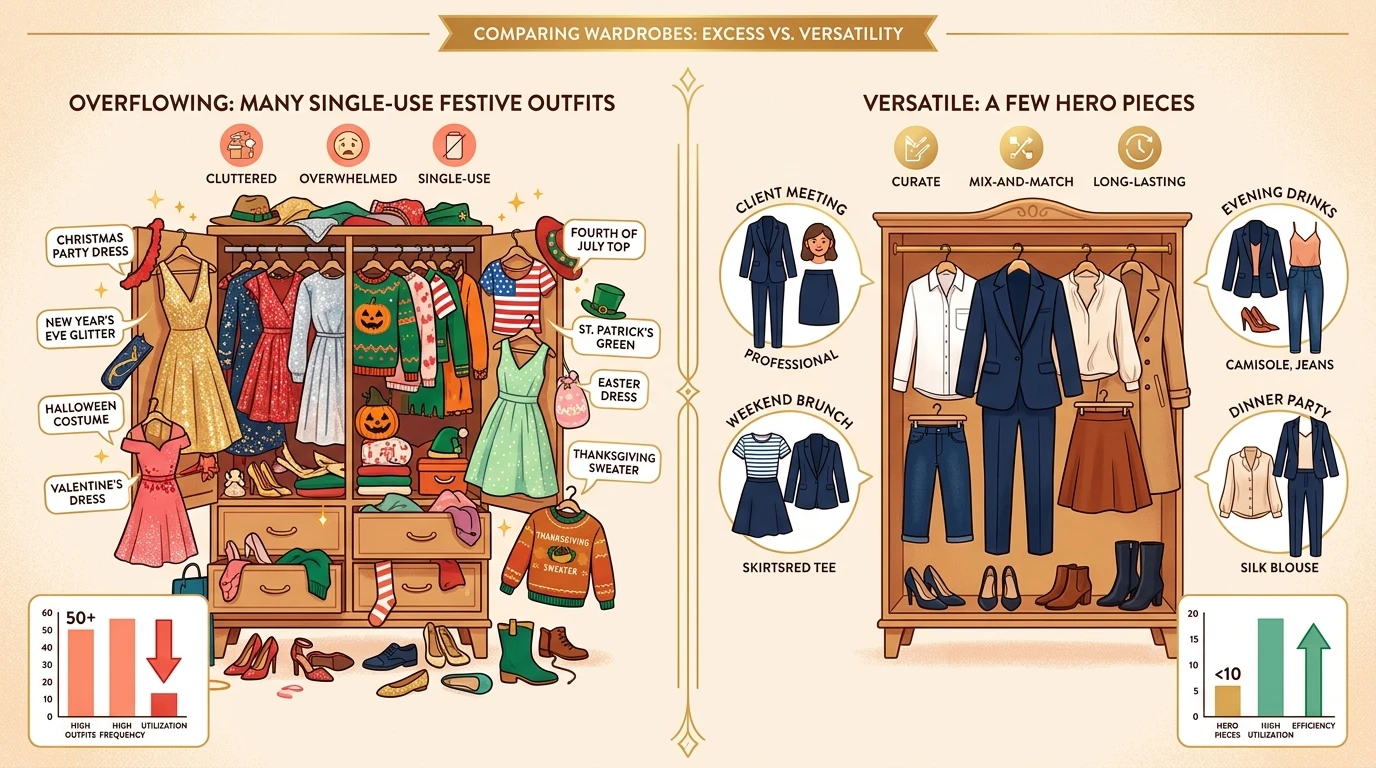
This blazer set styling case study leaves Priya — and anyone following along — with a handful of clear lessons. They’re simple, but they dramatically change how you shop and dress for weddings and festivals.
Wedding guest outfit rewear ideas with a blazer set
First, pick a hero blazer set in a versatile base colour and timeless silhouette. Then map out at least three upcoming occasions where you can wear it differently. Practical wedding guest outfit rewear ideas with Noor include:
- Mehendi with flat juttis, fresh flowers in your hair and lighter jewellery
- Reception with a different blouse and sleek hair, letting the blazer take centre stage
- Destination wedding welcome dinner styled more like a blazer dress with a slim belt
Each iteration uses the same handcrafted base but feels fresh in photos and in person.
How to restyle a blazer set across seasons
Second, build a tiny accessory capsule: two jewellery moods, two shoe options, two bags. That’s all you need to unlock multiple lives for one set. If you’re asking how to restyle a blazer set for cooler London evenings or humid Dubai nights, it often comes down to layers and textures.
Third, plan your hair and makeup “levels” in advance — full glam, soft glam and office. Rotate between them instead of buying new clothes each time. For more ideas, you can explore Swarna by Sangisathi’s own styling tips in their How to style blazer sets edit.
Finally, track cost-per-wear mentally or with an app. Watching the number drop every time you wear your blazer set makes rewearing feel like a win, not a compromise.
If you love this approach, consider other hero pieces from the brand’s collections — like kaftan-draped skirt sets or denim fusion looks — that can travel easily and serve across multiple events.
Frequently Asked Questions
How can I repeat festive outfits without looking the same every time?
You can repeat festive outfits by changing styling elements like jewellery, shoes, hair, makeup and drape instead of the core garment. In the blazer set styling case study, Priya used the same Noor blazer set but created three distinct moods by switching from heavy Kundan to minimal gold, from curls to sleek buns, and from dupatta to tailored blazer layering.
What are some wedding guest outfit rewear ideas with a blazer set?
A blazer set can work for multiple wedding events if you vary the details. Wear it with heavy jewellery and a dupatta for a sangeet, then style the blazer like a dress with a belt for cocktails, and finally pair the skirt with a different blouse for a mehendi. These wedding guest outfit rewear ideas stretch one handcrafted piece across several functions.
How do I restyle a blazer set for both Indian weddings and Western parties?
To restyle a blazer set for both Indian weddings and Western parties, treat accessories as your main lever. Go traditional with Kundan, potlis and embellished heels for weddings, then switch to minimal gold hoops, strappy sandals and a structured clutch for Western events. The blazer set styling case study shows that thoughtful accessory swaps can completely change the vibe.
Can I repeat festive outfits at work for Diwali or Eid?
Yes, you can repeat festive outfits at work by toning down the styling and keeping things polished. Choose subtle jewellery, closed-toe shoes and neat hair, and let a tailored piece like a blazer or structured kurta keep the look professional. Priya’s office Diwali look in the case study proves a repeated blazer set can still feel office-appropriate.
Is investing in one luxury blazer set cheaper than buying many cheaper outfits?
Over time, yes, one luxury blazer set can be cheaper when you calculate cost-per-wear. Three mediocre outfits worn once each cost more per outing than a handcrafted blazer set worn 10–15 times. The blazer set styling case study shows how planning multiple uses for a hero piece drops the cost-per-wear while giving you better quality and versatility.
Ready to choose your own hero blazer set?
Priya’s story shows what happens when you treat one handcrafted blazer set as a long-term partner instead of a one-night fling. One Noor Halter Top Skirt And Blazer Set carried her through a sangeet, a cocktail and an office Diwali, each time feeling intentional and new.
The deeper lesson is that a made-to-order, karigar-crafted piece from Swarna by Sangisathi isn’t just about luxury. It respects heritage crafts, aligns with global shifts toward circular fashion, and gives you a wardrobe that works harder with fewer pieces.
If you’re eyeing a busy festive season or a trip home packed with events, consider building your own blazer set styling case study. Start by browsing their curated blazer sets, read the blazer set buying guide, and imagine at least three occasions you could cover with one hero look.
Whenever you’re ready, visit Swarna by Sangisathi to explore handcrafted blazer sets, saree-blazer combinations and other fusion pieces, all made to order and shipped worldwide. Your next wedding season or Diwali could be the moment you turn outfit repeating into your most stylish move yet — and create your own blazer set styling case study.