

A kurta set centres on a kurta with coordinated bottoms: usually 2 pieces, or 3 with a dupatta. A co-ord usually pairs 2 coordinated pieces, a top and bottom designed to go together. A coordinated kurta set can therefore be both. Choose by the cut, coverage, layers and potential to wear the pieces separately, rather than the label alone.
Collins defines a kurta as a long, loose shirt-like garment, while its definition of a co-ord describes coordinated pieces designed to be worn together.
Kurta set vs co-ord set: overlapping labels, different buying checks
“Kurta set” names the central garment; “co-ord” describes the relationship between pieces. A kurta and trousers make a two-piece outfit; adding a dupatta makes three. Check what is included before comparing prices.
| Buying criterion | Kurta-led set | Other coordinated silhouettes | What to inspect |
|---|---|---|---|
| Coordinated components | Kurta and bottoms, possibly another layer | Shirt-trouser, top-skirt or jacket-led combinations | Every included piece |
| Top length | Varies with the kurta’s design | Can be cropped, hip-length or longer | Hem position standing and sitting |
| Bottom shape | May include straight trousers, palazzos or other bottoms | May include trousers, skirts or draped bottoms | Rise, width and walking room |
| Fabric or print coordination | Matching or deliberately contrasting | Matching or deliberately contrasting | How colours, prints and textures connect |
| Coverage | Depends on neckline, sleeves, length and slits | Depends on each garment’s cut | Coverage during movement |
| Dupatta inclusion | Optional | May be included | Whether it is included or separately styled |
| Seated movement | Depends on ease through kurta and bottoms | Depends on ease through top and bottom | Pulling, pressure and shifting |
| Layering | May include a dupatta or jacket | May include a jacket or overshirt | Warmth, coverage and adjustment |
| Separate-piece reuse | Depends on existing wardrobe pairings | Depends on existing wardrobe pairings | A realistic pairing for each piece |
A coordinated kurta-palazzo outfit illustrates the overlap. Shirt-trouser, top-skirt and jacket-led combinations offer other options, with pieces connected by matching or complementary colours, prints and textures.
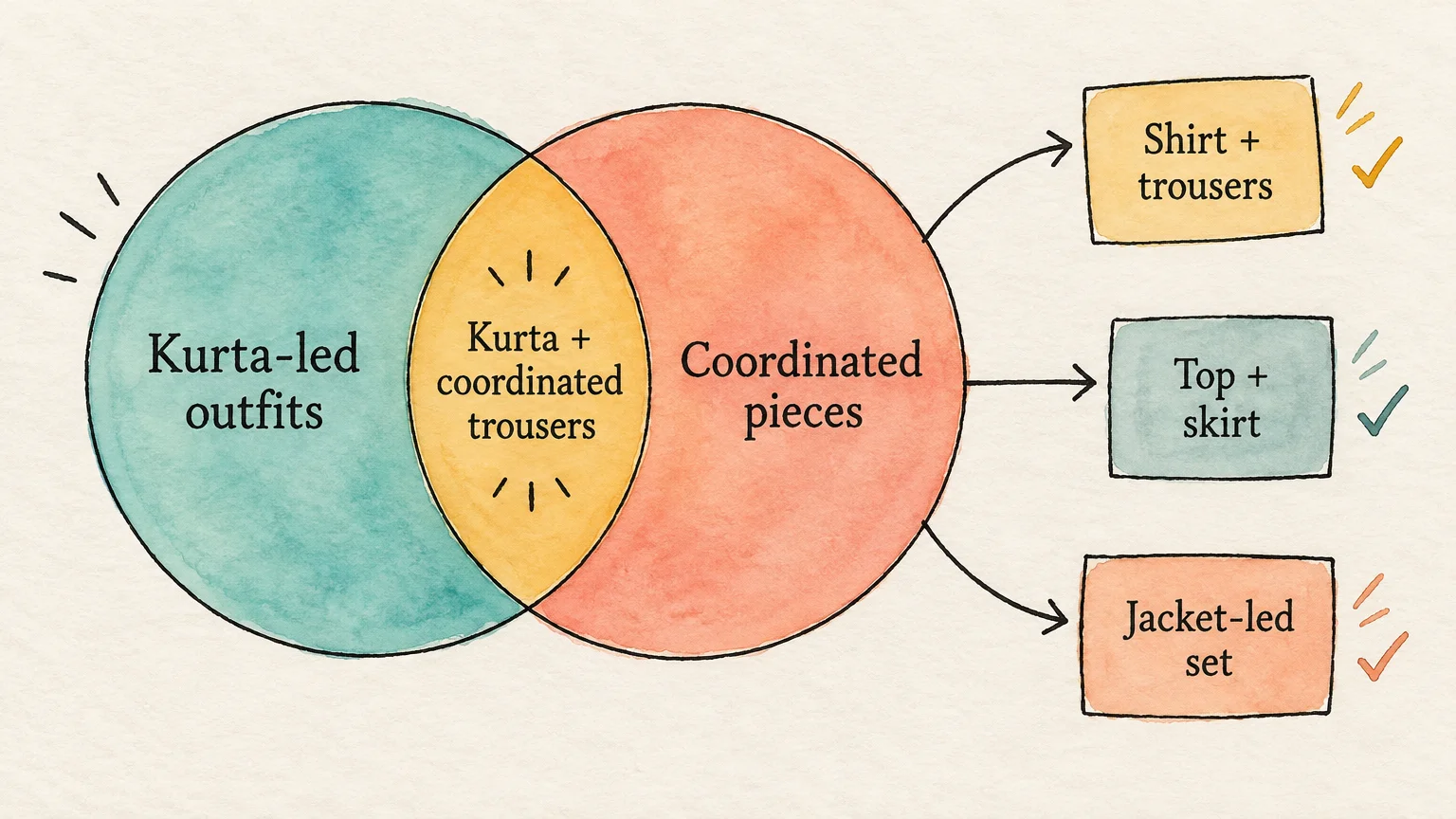
Both labels offer the ease of pre-coordinated dressing. Many co-ords have contemporary styling, but a kurta silhouette or Indian handcraft can be contemporary too. When exploring our contemporary Indian sets and co-ords, compare the garments rather than treating traditional and modern as opposites.
Check the cut while sitting, reaching and walking
The better-fitting outfit lets you move as your event requires. Start with shoulders, bust, waist and length, the fit areas identified by the NIOS clothing selection guide. Then compare neckline depth, sleeve and armhole room, side-slit height, trouser rise and waistband construction.
A longer top may give you the coverage you want, yet a narrow cut or hem can still restrict movement. A shorter top may simplify layering but expose more waist when you reach.
The CBSE Fashion Studies textbook explains that garment ease must accommodate walking, sitting, reaching and breathing. Try this sequence:
- Sit in a chair. Check waistband pressure, lap coverage, neckline movement and side-slit opening. Look for pulling across the hips, bust and upper arms.
- Try floor sitting if relevant. Use the position you expect at the ceremony, then stand up. Check knees, seat, trouser rise and where the hem settles.
- Bend and reach. Reach forward and overhead, then take a full breath. Notice riding-up, gaping or restrictive sleeves.
- Walk in the complete outfit. Add the intended footwear, dupatta or jacket. Check stride length, trailing fabric and repeated adjustment.
For several hours of wear, pay particular attention to waistband pressure and how often you need to rearrange the outfit. If buying online, ask about these fit details before ordering rather than relying only on the size label.
Compare fabric, embellishment and extra layers
Judge the complete construction, including every layer. Check weight, drape, lining, transparency and how many layers you will wear. Look at the outfit in daylight where possible; an inner layer needed for opacity changes how the whole outfit feels.
For hot outdoor plans, the India Meteorological Department’s heat guidance recommends lightweight, light-coloured, loose cotton clothing. A lined, layered outfit needs a different assessment from a lightweight single-layer garment, whatever its category.
Inspect embroidery where it meets your neckline, cuffs, waist, chair or another garment. A dupatta offers a flexible styling layer but needs managing. A jacket adds structure and another way to restyle the outfit, but also another layer to wear.
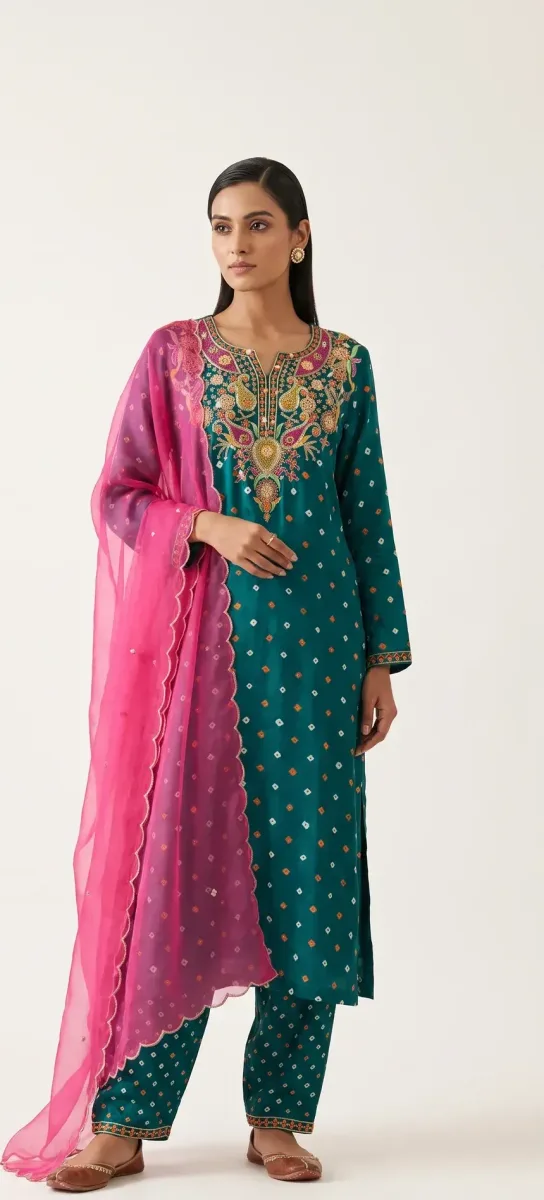
Our teal Bandhani kurta set, priced at ₹11,500, is also a Co-ord Set. Its three pieces are a straight kurta, matching trousers and a contrasting pink organza silk dupatta, with hand embroidery at the neckline and cuffs.
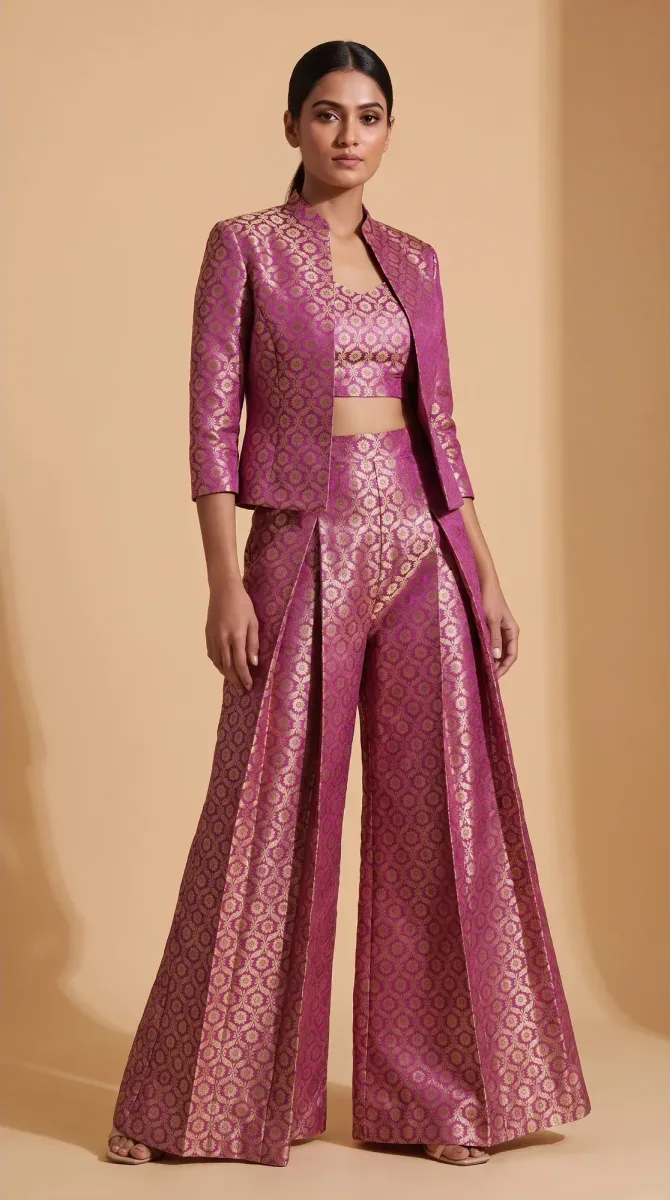
Our ZARIKA jacket and pant set, priced at ₹9,950, takes another form: a cropped open-front jacket, matching crop top and high-waisted pleated wide-leg pants in Banarasi antique zari brocade. It takes 46–50 artisan hours to make.
Both are three-piece sets, but their coverage and layering differ. Both require dry cleaning, so weigh care alongside appearance and fit.
Choose for the ceremony, daytime gathering or evening event
Family ceremony or puja: prioritise coverage and floor sitting
Choose the outfit that meets the ceremony’s coverage expectations and passes a floor-sitting check. For a family puja where you expect to sit on the floor and want upper-body coverage, compare a straight kurta with roomy trousers and a dupatta against a hip-length shirt with fitted trousers.
First, check the host’s expectations and whether you want a dupatta. Then try floor sitting and standing in each outfit, checking neckline, slit opening, trouser rise and waistband pressure. If the kurta-led outfit maintains your desired coverage while the fitted trousers pull at the knees, choose the kurta set for this ceremony.
Outdoor daytime gathering: prioritise lighter construction
Choose the lighter suitable construction for warm outdoor wear. For a warm-weather lunch with time outdoors and some walking, compare a lightweight, unlined, loose cotton shirt-trouser set with a heavier, lined jacket-led outfit.
Check the weight of all the layers and the coverage you need. Then check transparency in daylight and walk in the intended footwear. If the cotton set provides enough coverage without an extra inner layer, choose it for this lunch. Its lighter construction suits the time outdoors; save the lined option for conditions where its extra layer works for you.
Indoor evening celebration: balance formality and movement
Both a dressy kurta set and another coordinated silhouette can work for an evening or wedding function. For an indoor celebration with dinner and dancing, use the invitation and venue expectations to establish formality first.
Compare an embroidered straight kurta with trousers and a dupatta against a crop top with wide-leg trousers and a tailored jacket. Check both against the invitation’s formality, then sit, reach and try a few dance steps. If both pass, you like a structured outline and you are comfortable with the cropped inner top, choose the jacket-led set. Choose the kurta-led option instead if its cut provides the continuous waist coverage you prefer.
For office or dressy everyday wear, apply the same test to your working day. Vogue India’s office dressing guide includes minimally styled kurta sets. Suitable shirt-trouser co-ords and kurtis can also work as formal office outfits when they meet workplace expectations. Prioritise desk sitting, neckline, sleeves and manageable care. Choose footwear and a bag suited to walking, the venue and the outfit’s existing detail.
Audit the separates against clothes you already own
Count a piece as reusable only when you can name an existing wardrobe pairing for it. Use these suggested pairings as prompts, replacing them with garments you actually own.
| Included piece | Existing pairing to try | Fit or colour check | Possible occasion |
|---|---|---|---|
| Kurta | Plain trousers or palazzos | Hem length, colour and proportions | Dressy everyday wear |
| Trousers | A shirt or simple top | Rise, waistband visibility and print balance | Work or lunch |
| Coordinated top | Another skirt or trousers | Waist coverage and silhouette | Dinner or a gathering |
| Dupatta | A simple outfit | Colour, neckline and embroidery balance | A family ceremony |
| Jacket | Plain top and bottoms | Armhole room and competing detail | An evening event |
Start with the complete kurta set and arrange any included dupatta so your hands are free. Then try the kurta with another pair of bottoms, comparing the colour, hem length and proportions with the original combination.
Distinctive prints, festive embroidery or specialised care may limit everyday reuse. Prioritise pairings you expect to wear and care for regularly.
Choose the set that passes your checks
- Choose a kurta set if you want a kurta-led silhouette and its neckline, sleeves, slits, bottoms and optional dupatta meet your needs.
- Choose another co-ord silhouette if its shirt, top, skirt, trousers or jacket better suit your coverage, movement, layering and wardrobe pairings.
- Before buying either, confirm inclusions, seated fit, fabric layers, care and event timing.
For our made-to-order teal set, we offer a complimentary WhatsApp fit consultation and custom measurements. Making takes 4–5 weeks; contact us before purchasing to confirm delivery for your event. Explore our handcrafted Indian occasionwear for your next celebration.