
TL;DR: A made to order bridal story can transform the stress of a cross-cultural wedding into a confident, seamless style moment. Our London-based bride blended Indian heritage with a minimal European vineyard venue, dancing comfortably for six hours in a handcrafted Indo-Western set. With a 5–6 week custom timeline, remote fittings, and thoughtful design, the result was a balanced, meaningful look.
A Cross-Cultural Bride’s Style Dilemma
On a warm June afternoon in a sunlit Tuscan vineyard, Ananya stood between two open suitcases: one filled with screenshots of ornate lehengas, the other with sleek white gowns. Both felt wrong for her destination wedding. Neither reflected the layered story she wanted her bridal look to tell.
She loved the drama of traditional Indian bridalwear, but every heavy cancan and multi-layered dupatta felt out of place against a minimalist European estate. At the same time, a classic Western gown seemed too plain for her pheras and too distant from her roots and her family’s expectations.
That’s where a made to order bridal story with us at Swarna by Sangisathi stepped in. We became her bridge between cultures: one handcrafted Indo-Western look that could honour ritual, suit a vineyard setting, and let her move freely from ceremony to dance floor.
Ananya’s situation is no longer rare. According to Gitnux wedding data, about 28% of weddings are destination celebrations, and around 22% are multicultural or fusion. At the same time, The Knot Worldwide reports that 66% of couples now weave in cultural traditions.
So Ananya isn’t just one bride; she represents hundreds searching for outfits that feel authentic yet venue-appropriate. Through her story, we’ll show how Swarna by Sangisathi used a made to order bridal story approach to solve her dilemma and how you can adapt the same thinking for your own cross-cultural wedding.
The stakes beyond just style
For Ananya, the outfit wasn’t only about fashion. It was about reassuring her parents that their traditions mattered, while still feeling at home in a modern, Western venue. She needed an ensemble that photographed beautifully, travelled well, and felt like an honest extension of her personality.
By the end of her journey, her grandparents called her look “so Indian” and her British in-laws called it “so her”. That emotional alignment is exactly what a thoughtful made to order bridal story is designed to create.
Why Swarna by Sangisathi caught her eye
Ananya wanted something handcrafted, not mass-produced. Our blend of heritage Zardosi techniques with contemporary silhouettes like blazer sets, kaftan sets, and saree-blazer ensembles felt like the missing piece. Our Made To Order model and global shipping meant she could design from London, receive her outfit in time, and still honour Indian karigar artistry.
Background: Meet Our Global Indian Bride
Ananya is a 30-year-old Indian-origin marketing professional based in London, marrying her British partner, James. They chose an intimate countryside estate in Italy for their vows, with a sun-drenched courtyard for the ceremony and a vineyard lawn for cocktails and dancing.
Her parents dreamed of seeing her as a traditional Indian bride. Her friends, many of them British and European, imagined a light, modern look that matched the rustic-chic venue. Ananya wanted both: the rituals and the romance, without feeling like she’d swapped identities between events.
One outfit, many moments
Instead of multiple heavy changes, Ananya wanted one core look that could flex across the day. It needed to feel respectful for a short Hindu ritual, refined enough for a civil ceremony, and relaxed enough for an evening of speeches and dancing under fairy lights.
This is where a made to order bridal story shines. We design with the whole timeline in mind, not just a single stage moment. Every decision about fabric, silhouette, and embroidery considered how her day would flow from vows to last song.
From Pinterest confusion to clear direction
Like 73% of couples who use social media for wedding planning, according to Gitnux, Ananya’s phone was full of saved posts. Heavy red lehengas sat next to minimalist slip dresses, plus a few Indo-Western looks she found while searching for an indian bride outfit for foreign wedding.
She discovered Swarna by Sangisathi through Instagram, drawn to our Indo-Western blazer sets, saree-blazer hybrids, and fluid draped skirts. Our use of hand-embroidered Zardosi on modern cuts felt like a blueprint for the made to order bridal story she was craving.
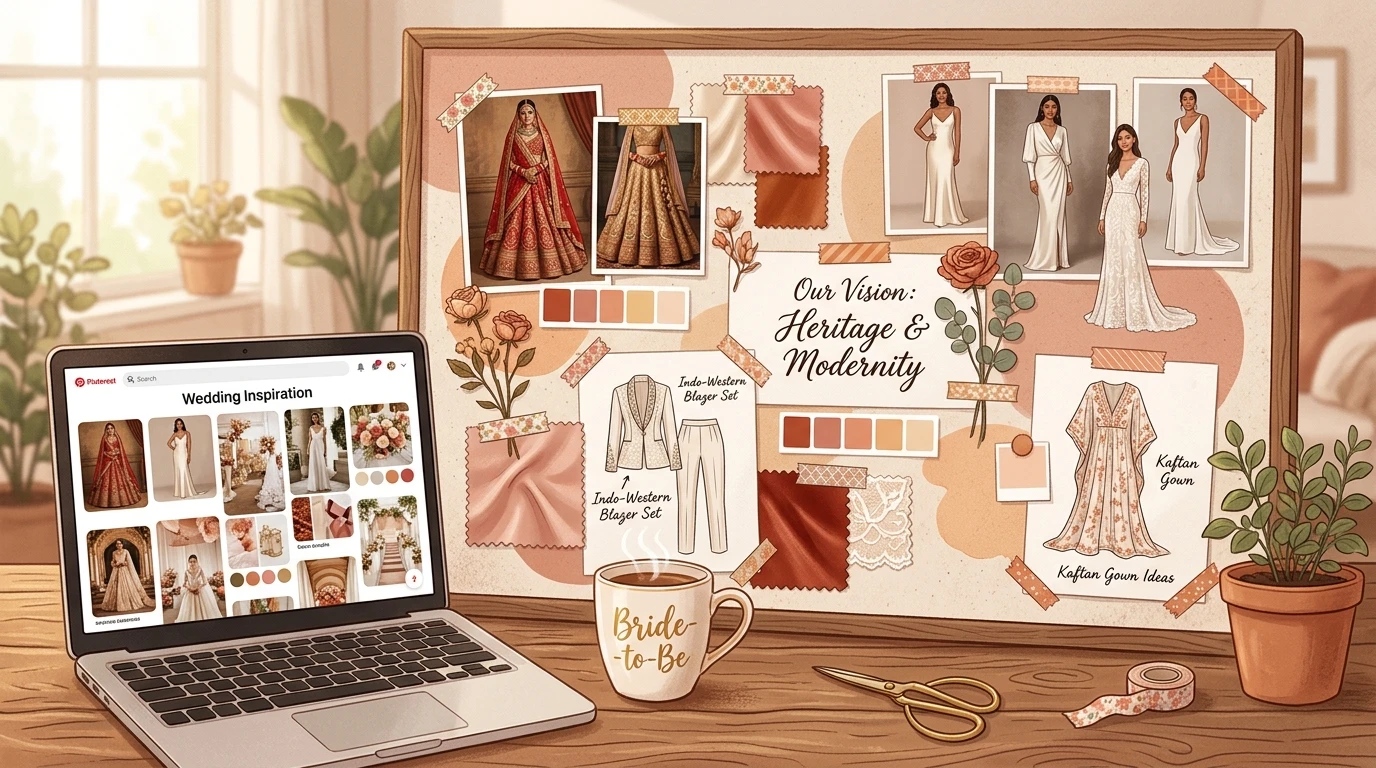
Why Are Cross-Cultural Bridal Looks Tricky?
Cross-cultural bridal looks are tricky because they must satisfy three opposing forces at once: cultural symbolism, venue aesthetics, and real-world comfort. Off-the-rack lehengas or Western gowns usually solve only one or two of these, not all three.
For Ananya, traditional Indian silhouettes felt too ornate for an outdoor vineyard. At the same time, a plain gown didn’t reflect the emotional weight of her rituals. She needed a custom reception look for mixed wedding dynamics, one that centred her story rather than any single tradition.
Venue and climate vs. traditional structure
Outdoor European or Australian venues often mean uneven lawns, stone steps, and lots of walking. Heavy skirts with voluminous cancan, plus multiple dupattas, can quickly become a burden. Long trains on Western gowns, meanwhile, may drag through grass or sand.
Destination weddings also last several hours, sometimes in strong sun. According to destination wedding statistics, guests often stay 4–5 days, with multiple events. Lightweight, breathable fabrics and movement-friendly cuts become non-negotiable.
Cultural expectations and emotional pressure
Ananya’s parents wanted clear visual cues of an Indian bride: rich textiles, thoughtful embroidery, and modest yet flattering coverage. Her British family imagined something clean and minimal that wouldn’t feel out of place next to linen suits and pastel bridesmaids’ dresses.
Balancing those expectations is where a made to order bridal story becomes powerful. Instead of choosing between extremes, we blended elements: Indian craft language, Western-inspired structure, and a colour palette that worked with the vineyard’s soft greens and stone.
- Traditional Indian silhouettes offer cultural depth but can feel heavy for outdoor venues.
- Western gowns match minimal décor but may feel emotionally distant from rituals.
- Indo-Western fusion, when made to order, can merge symbolism, comfort, and setting.
As the global destination wedding market heads toward USD 180.9 billion by 2034, more brides face this balancing act. A structured, made to order bridal story lets every choice be intentional instead of compromised.
That’s why we nudged Ananya away from ready-made racks and towards a tailored Indo-Western vision, rooted in the realities of her venue, guest mix, and body comfort.
How Did We Build Her Made To Order Bridal Story?
We built Ananya’s made to order bridal story through a step-by-step process: listening first, then sketching, refining, and handcrafting. Each phase was designed to keep her involved and reassured, even while she lived in London and we worked from India.
Our goal was simple: create a real bride custom Indo Western look that felt effortless on the day yet deeply considered underneath every seam and stitch.
Step 1: A detailed video consultation
We began with a long video call, where Ananya shared photos of the estate, the ceremony courtyard, and the reception lawn. She walked us through her schedule, how much she dances, and what she usually feels comfortable wearing.
She had a loose brief: an Indian-meets-modern silhouette with no heavy cancan, no trailing dupatta to worry about, and a luminous yet subtle colour. We talked through our Tales of Tissue pieces, saree-blazer sets, and kaftan draped skirt sets as starting points for her made to order bridal story.
Step 2: Choosing silhouette and fabric
Together, we narrowed it down to a fluid draped skirt paired with a structured, hand-embroidered blazer over a sleek inner blouse. This shape nods to a saree’s drape and a lehenga’s drama, yet reads as polished and contemporary in a Western setting.
We suggested tissue silk for its lightweight structure and soft, reflective sheen in natural light. If you’re exploring similar options, our guide on tissue silk wedding outfits breaks down why this fabric photographs so beautifully outdoors.
- Blazer set: ease of movement and re-wear potential post-wedding.
- Draped skirt: saree-inspired feel without the complexity of pleating on-site.
- Tissue silk: breathable, luxurious, and ideal for travel and natural light.
Step 3: Craft language and embroidery layout
For embroidery, we stayed true to our roots: Zardosi from Lucknow and Bhopal. But instead of dense, heavy motifs, we used more linear, botanical patterns running along the blazer’s lapel, cuffs, and back panel, with delicate accents at the skirt’s hem.
This kept the outfit recognisably Indian without overwhelming her petite frame or the minimal venue. The muted champagne base with soft gold and blush threadwork became a quiet statement, rather than shouting for attention in group photos.
Step 4: Remote measurements and timeline planning
Logistically, we mapped her made to order bridal story around our 5–6 week production window. We built in extra time for international shipping to London and small local alterations if needed. Ananya booked her consultation almost five months before the wedding, which gave everyone breathing room.
We shared a detailed measurement guide and cross-checked key points over video. As the team at A.Cherie Couture says, “Our dresses are made to your specific measurements, which ensures a great fit and keeps dress alterations to a minimum.” We follow the same philosophy for our global brides.
- Week 1–2: Design finalisation, sketches, colour and embroidery approvals.
- Week 3–5: Handcrafting, with update photos of in-progress embroidery and fittings on the mannequin.
- Week 6: Final checks, steam pressing, and dispatch with tracking.
Seeing sketches, swatches, and work-in-progress photos helped Ananya trust the process from abroad. Her made to order bridal story stopped feeling abstract and became something tangible she could watch unfolding.
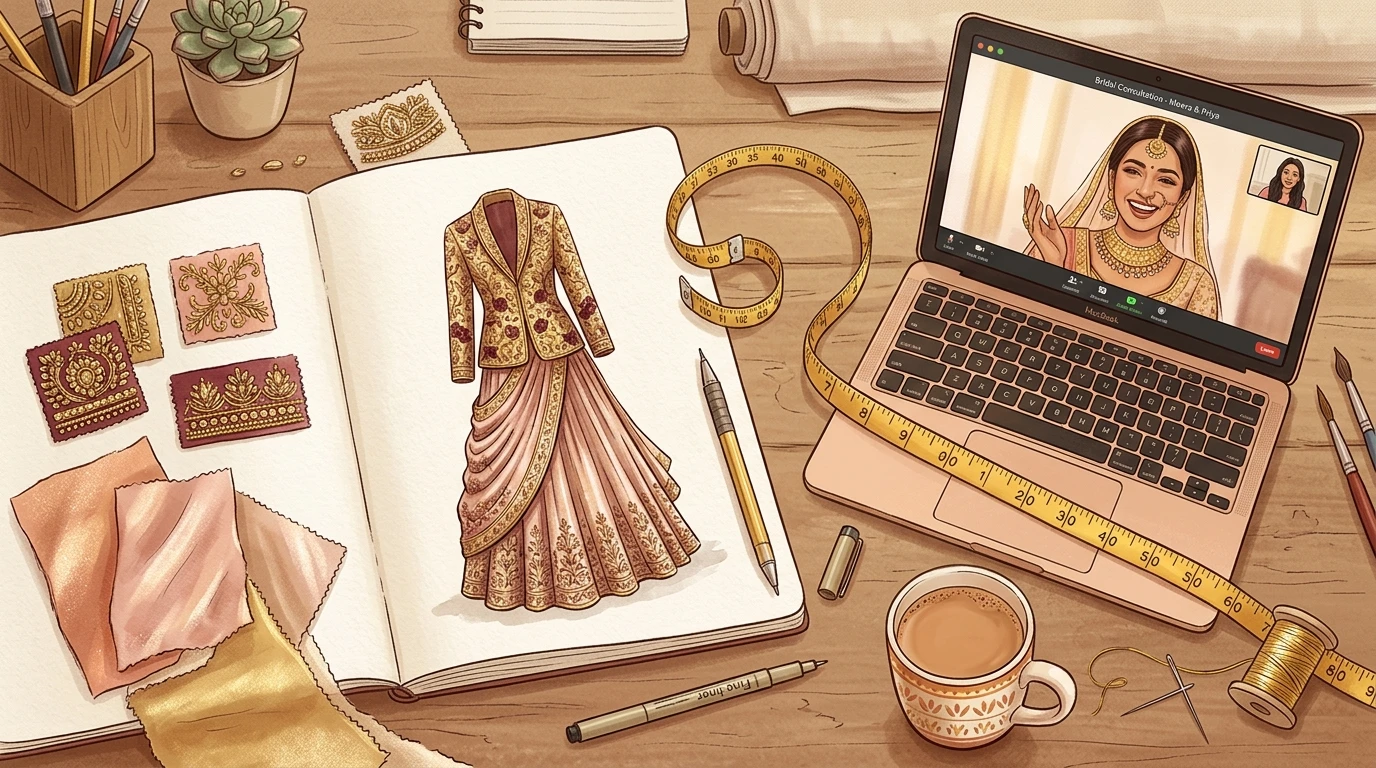
What Changed: Reactions, Comfort, Confidence?
When the final outfit arrived in London, Ananya unboxed it with her mother on a video call from Mumbai. The first thing she noticed was the fall of the draped skirt and the soft shimmer of tissue silk catching the light in her flat’s window.
She told us later, “I finally felt like the bride version of myself, not a costume version of myself.” That’s the quiet power of a well-crafted made to order bridal story—it feels like you, just elevated.
On the day: movement and ease
On the wedding day, the outfit performed exactly as planned. The skirt floated over the lawn without snagging, the blazer stayed neat through hugs and photos, and she never once had to adjust a slipping dupatta or tight waistband.
She could sit on stone steps for portraits, dance to Bollywood tracks with cousins, and walk between vineyard rows for golden-hour photos. The entire look acted as a functional, comfortable custom reception look for mixed wedding moments, not just a showpiece.
Guest reactions across cultures
Her Indian relatives recognised the Zardosi motifs instantly and loved that she’d chosen a handcrafted, karigar-made ensemble. Western guests, on the other hand, kept complimenting the sharp blazer cut and “editorial” feel of the draped skirt.
Several people asked if it was couture from a European house. She proudly explained it was a real bride custom Indo Western look from Swarna by Sangisathi, made in India and shipped to London just for her.
- Indian guests felt seen through textiles, motifs, and modest yet graceful coverage.
- Western guests connected with the clean lines, subtle colour story, and modern silhouette.
- Ananya felt emotionally centred, rather than pulled between two style worlds.
Best of all, she realised the outfit’s life wouldn’t end with the wedding. She has already worn the blazer with tailored trousers for a formal dinner, and she plans to pair the draped skirt with a simple silk shirt for an anniversary party.
That long-term versatility is another benefit of a thoughtful made to order bridal story—it becomes part of your wardrobe, not just your memory box.
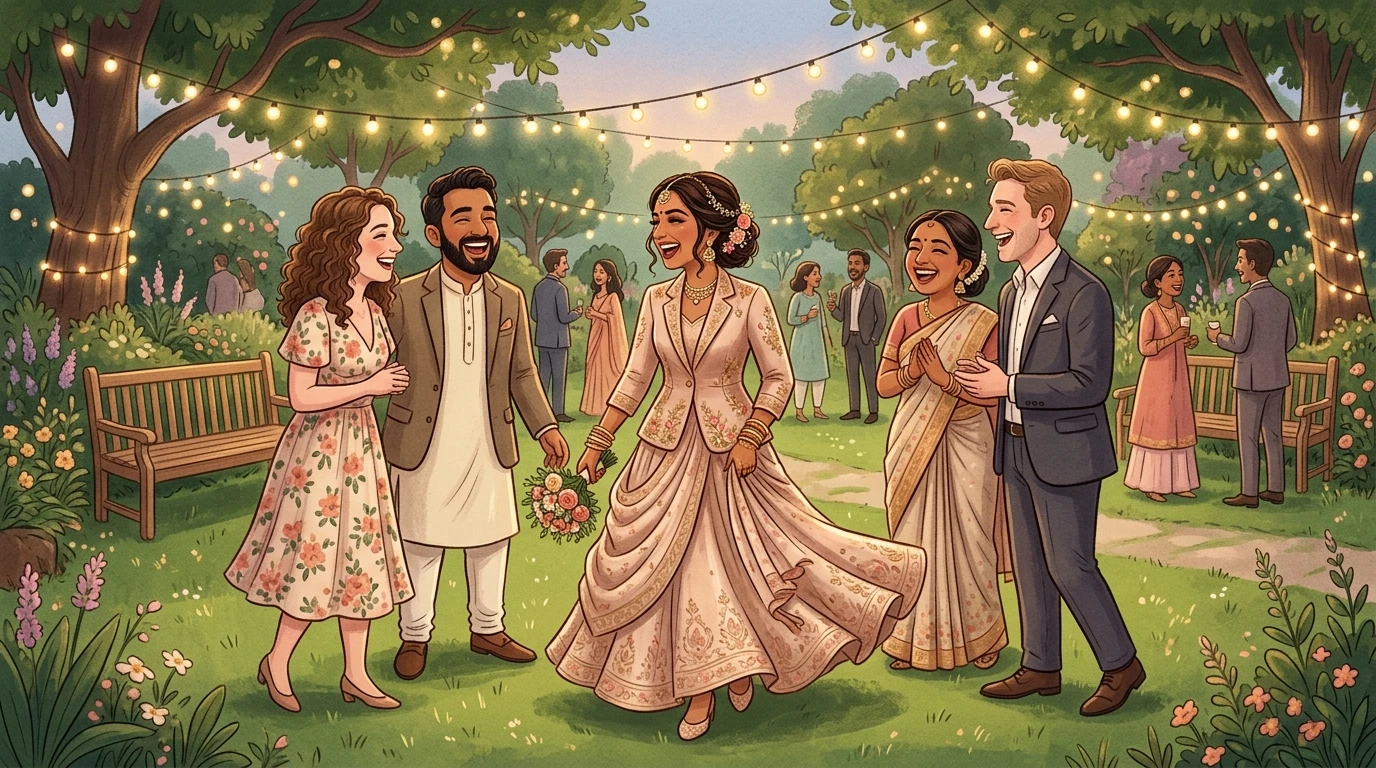
Key Lessons For Your Own Bridal Story
Ananya’s journey shows how a made to order bridal story can bridge cultures, climates, and expectations. If you’re planning a cross-cultural or destination wedding, you can borrow these principles to shape an outfit that truly feels like you.
Think of her experience as a living template—a real bride custom Indo Western reference you can adapt for your own venue, rituals, and comfort level.
Plan early and work backwards from your date
We recommend starting your design journey at least 4–6 months before the wedding. This window covers concept calls, approvals, our 5–6 week handcrafting period, international shipping, and any local alterations.
The sooner you begin your made to order bridal story, the more room you have for thoughtful details rather than last-minute compromises. Early planning also lets you coordinate with hair, makeup, and photography so everything feels cohesive.
Share your real-life needs, not just Pinterest boards
During your consultation, go beyond inspiration images. Talk about how you move, how you handle heat, which rituals you’ll perform, and which cultural cues matter most to you and your family.
For an indian bride outfit for foreign wedding settings, we often recommend silhouettes like draped skirts, blazer sets, kaftan sets, and saree-blazer hybrids. They balance movement and modesty, photograph beautifully, and transition smoothly from ceremony to reception.
- Send venue photos and note whether you’ll be on grass, sand, or stone.
- List key rituals and how long you’ll be on your feet.
- Highlight colours, motifs, or heirloom ideas you want to include.
When it comes to details, modern layouts of paisleys, florals, or jaali patterns can keep your look current yet rooted. If you love separates, consider pieces like Zardosi-embroidered blazers or how to style blazer sets for maximum re-wear potential.
Remote brides across the UK, USA, Middle East, Europe, and Australia can absolutely achieve a real bride custom Indo Western experience through video calls, digital swatches, and structured measurement guides—just like leading custom ateliers such as Angela Kim Couture describe on their custom process page.
Frequently Asked Questions
What is a made to order bridal story for a cross-cultural wedding?
A made to order bridal story is a fully customised design journey that builds your outfit around your venue, rituals, comfort needs, and cultural mix. Instead of buying a standard lehenga or gown, you co-create an Indo-Western look that fits a foreign setting while still honouring your heritage, often through fabrics, motifs, and silhouette choices.
How do I choose an Indian bride outfit for a foreign wedding venue?
Start with your venue and climate, then work backwards. For an Indian bride outfit for foreign wedding settings like vineyards, beaches, or gardens, look for lighter fabrics, movement-friendly silhouettes, and embroidery layouts that feel refined rather than overly heavy, while still using Indian craft techniques and colours that matter to you and your family.
Can I design a real bride custom Indo Western outfit from abroad?
Yes, you can create a real bride custom Indo Western look entirely from abroad using video consultations, digital sketches, and detailed measurement guides. Many modern couture and bridal ateliers now work remotely with overseas clients, aligning production timelines and shipping with your travel dates to ensure a secure fit and stress-free delivery.
What makes a good custom reception look for a mixed wedding?
A strong custom reception look for mixed wedding celebrations should balance cultural symbolism with easy wearability. That often means Indo-Western silhouettes like blazer sets, draped skirts, or saree-blazer combinations in lightweight fabrics, plus embroidery or motifs placed thoughtfully so they feel elegant in both traditional rituals and Western-style photos or speeches.
When should I start planning my made to order bridal story?
Ideally, begin your made to order bridal story at least 4–6 months before your wedding. This allows time for concept discussions, design approvals, a 5–6 week handcrafted production window, international shipping if needed, and any small local alterations, so you can focus on enjoying your celebration instead of worrying about last-minute outfit issues.
Conclusion: Start Your Made-To-Order Journey
Ananya’s path from lehenga-vs-gown confusion to a confident Indo-Western blazer and draped skirt set shows exactly what a made to order bridal story can do. It honoured her Indian heritage, suited a minimal European vineyard, and kept her comfortable through every hug, ritual, and dance step.
As multicultural and destination weddings grow worldwide, a customised, handcrafted look is one of the most meaningful investments you can make. Whether you imagine yourself in tissue silk, a saree-blazer hybrid, or a fluid kaftan set, we’re here to translate that vision into a custom reception look for mixed wedding celebrations.
If you’re ready to explore your own made to order bridal story, we invite you to learn more about silhouettes in our Indo-Western blazer trends feature and browse our take on how to style blazer sets. Then reach out to us through Swarna by Sangisathi to begin your virtual consultation and design journey.