

Modal is a regenerated cellulose fibre and a variation of rayon or viscose, according to Textile Exchange’s modal definition. ‘Modal silk’ is a commercial name commonly used for modal-based fabric with a silky feel or appearance; the name alone does not tell you whether real silk is present. Our Blue Modal Silk Zardosi Work Shirt costs ₹9,450 inclusive of taxes and is dry clean only, illustrating why fabric and garment-care information need to be read together.
What is modal silk, and does it contain real silk?
Modal silk can contain real silk when it is a modal–silk blend; the fibre percentages tell you how much. Modal is cellulose-based; silk is a protein filament produced by silkworms, as defined by Assam’s Directorate of Sericulture.
In shopping descriptions, modal silk can mean:
- Modal fabric with a silk-like appearance: the description highlights a silky look.
- A modal–silk blend: both fibres are present, with their proportions established by a composition declaration.
- Different materials in different components: a saree body, border and pallu, for example, may not share the same composition.
Think of fibre content as the ingredients, weave as how those ingredients are assembled, and finishing as the surface treatment. Weaving interlaces yarns at right angles, as explained in CottonWorks’ weaving guide.
| Word on the listing | What it tells you | What you still need to know |
|---|---|---|
| Modal | A regenerated cellulose fibre | Whether silk is also present |
| Silk | A protein fibre | Its percentage in the complete fabric |
| Satin | A weave or construction description | Which fibres the yarns contain |
| Finish | A treatment affecting the fabric’s surface | The fibre ingredients |
| Zardosi | An embroidery craft | The base cloth’s composition |
Confirm silk content through the fibre declaration: the Silk Mark Organisation’s FAQ cautions that identifying silk by look and feel is very difficult. For Gajji silk too, use a fibre-content declaration to confirm purity.
Modal belongs to the rayon/viscose family. Cotton differs because its fibres are harvested rather than dissolved and regenerated.
From wood pulp to finished fabric
Modal starts with plant-derived cellulose and becomes a manufactured fibre through chemical processing. Textile Exchange’s manufacturing definition explains that cellulosic feedstock is pulped, dissolved and chemically regenerated into fibre.
- Prepare the pulp: process the cellulosic source material into pulp.
- Regenerate the fibre: dissolve the cellulose and reform it into fibres.
- Construct the cloth: spin fibres into yarn, then weave or knit the fabric.
- Finish the surface: apply treatments that influence appearance and handle.
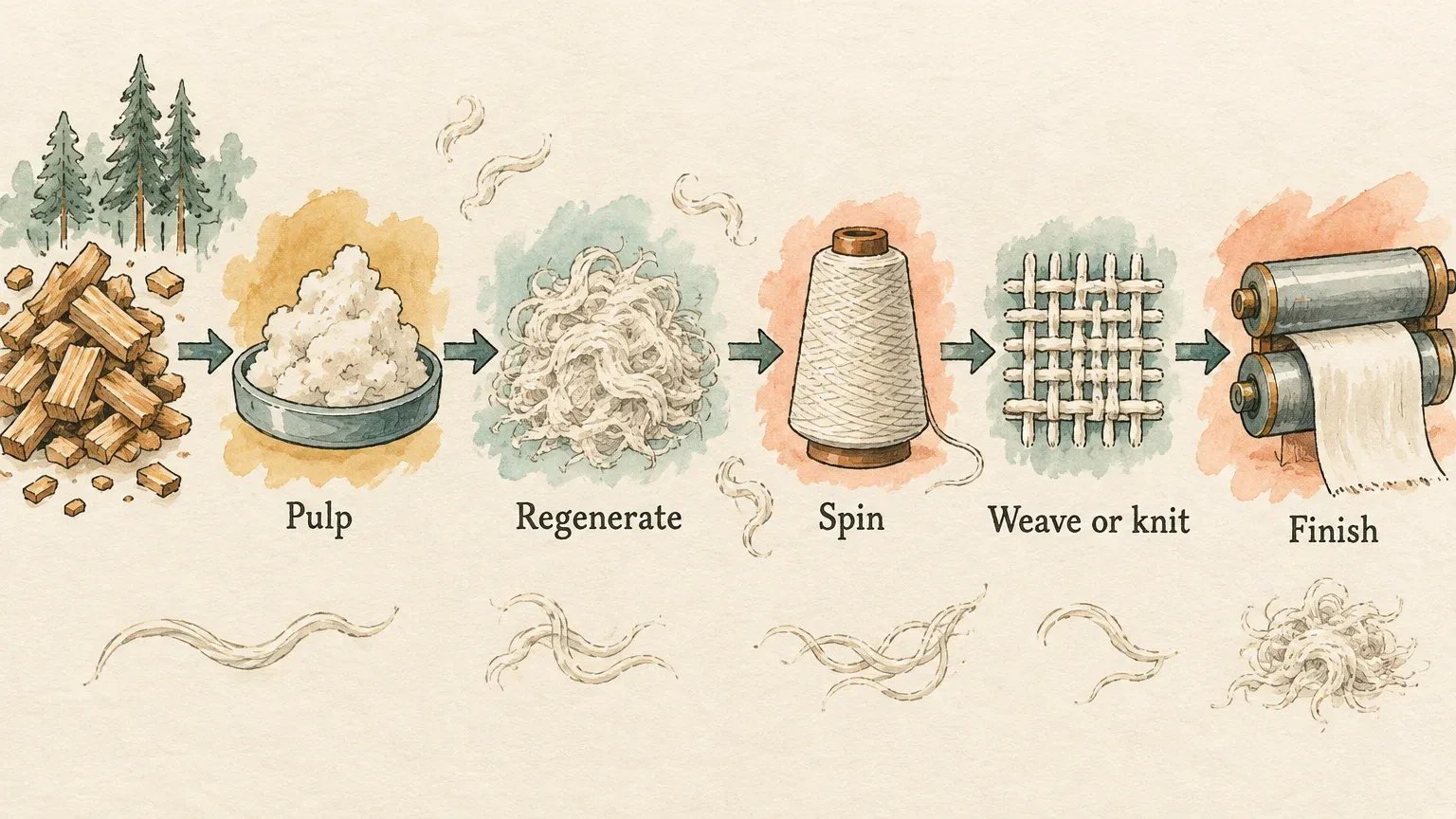
Lenzing’s TENCEL-branded Modal uses beech wood, according to Textile Exchange. For other modal fabrics, confirm any beech or birch claim through producer information.
Gloss can also come from finishing. Calendering is a mechanical process that can create lustre and smoothness without adding silk, according to CottonWorks’ mechanical finishing guide.
Plant-derived does not automatically mean sustainable. Textile Exchange’s environmental guidance explains that impact depends largely on how the source material is produced. Processing and producer-specific evidence also matter. Look for substantiated sourcing or certification information rather than assuming that modal silk is eco-friendly, biodegradable or lower impact.
For another occasionwear fabric comparison, see our guide to tissue silk versus organza.
Feel, drape and comfort in occasionwear
Modal-based occasionwear can feel soft and fluid; warm-weather comfort depends on fabric weight, construction, finish and lining. TENCEL describes softness and moisture management for its branded Modal fibres.
Softness is how the surface feels against your skin. Sheen is reflected light. Drape is how the cloth falls and moves. A glossy photograph tells you little about fabric weight, stiffness or comfort through a long celebration.
Modal-based fabrics appear in sarees, everyday tops, dresses and skirts. In contemporary occasionwear, embroidered shirts, skirt-and-top sets and co-ords, assess the construction as carefully as the cloth. For warm-weather festivities, consider lining coverage, room through the body and the placement and density of embroidery.
Ajrakh identifies a decorative craft; check the fibre composition alongside it.
- Feel: assess the surface that will actually touch your skin.
- Movement: check whether you can sit, reach and move comfortably.
- Durability: inspect seams, embroidery security and available repair options.
- Price: judge the complete garment, including construction and handwork.
- Care: include future cleaning costs and effort in your decision.
A buying checklist for modal silk garments
For any listing that gives only a commercial fabric name, use this reusable buying checklist as a seller message:
Please share the following information for the garment I am considering:
- The outer fabric’s fibre percentages, including whether real silk is present and its percentage.
- A supplier specification or fibre-content label, where available.
- The lining’s composition and which parts of the garment it covers.
- The weave and any documented surface finish.
- The embroidery and trim materials.
- Cleaning, pressing and storage instructions for the complete garment.
The US Federal Trade Commission illustrates this format with a 100% nylon shell and a 100% polyester lining.
A real shirt listing: what to check before buying
What the Blue shirt listing tells you
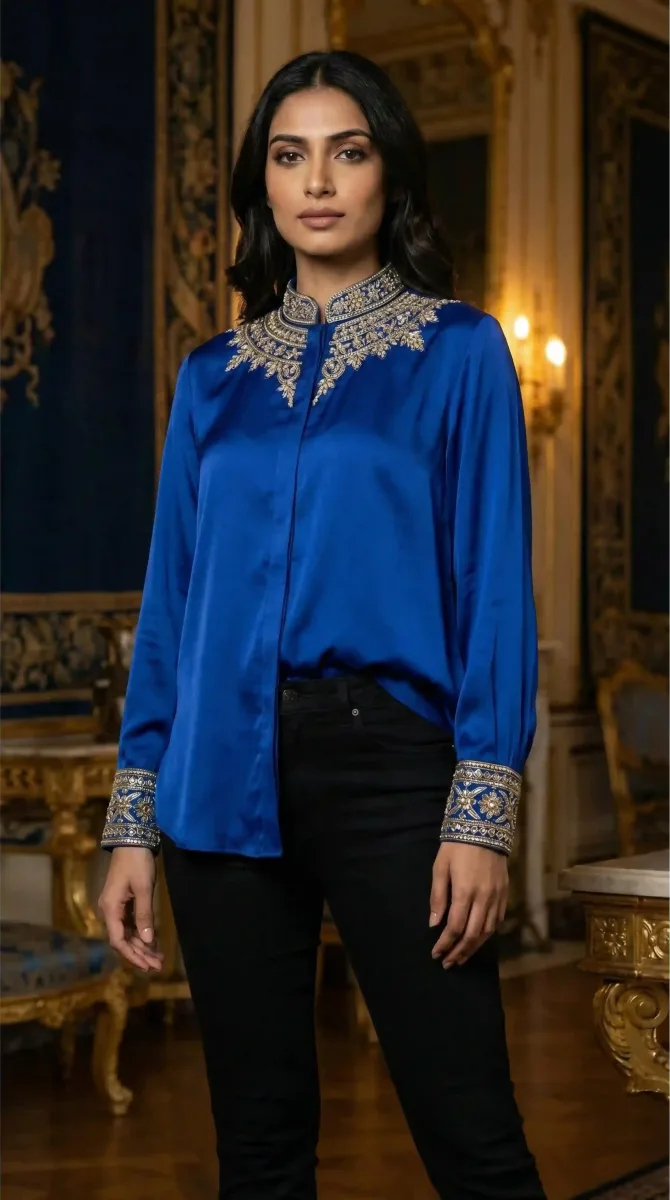
Our Blue Modal Silk Zardosi Work Shirt listing provides concrete information about price, handcraft and care:
| Detail | Listed information |
|---|---|
| Price | ₹9,450 inclusive of taxes |
| Fabric description | Modal Silk |
| Care | Dry clean only |
| Handcraft | Zardosi hand embroidery |
| Lead artisan | Shambu Adhikary, Bhopal |
| Artisan time | 43–48 hours |
| Made-to-order timeframe | 4–5 weeks |
The ₹9,450 price applies to the complete handcrafted shirt.
If you have a fixed event date, confirm delivery before purchasing.
Follow the complete garment’s care instructions
Only wash an embroidered shirt at home if its own care instructions permit it. The Blue shirt’s instruction is dry clean only; generic washing advice for plain modal does not override it.
GINETEX’s textile care guidance accounts for the base textile, colouring, finishing, accessories and applications. When discussing cleaning, include lining and embellishments as well as the outer cloth. Give your cleaner the garment’s care instructions before treatment.
Choose with the composition and care in hand
Start with the fibre declaration, then assess feel, fit, craftsmanship and the cleaning commitment. Choose the garment because those details suit your occasion and future wear. For the next stage of comparing handwork and fit, use our Zardosi Shirt Buying Guide.