

TL;DR: Choosing between a tissue silk vs organza saree changes how you look, feel and photograph at big events. Studies show tissue silk is slightly heavier but holds sharper pleats, while organza is super lightweight and airy. For most reception nights, tissue wins on structure and richness; for hot daytime weddings, organza often feels cooler and more ethereal.
Tissue silk vs organza saree: why this choice matters
The tissue silk vs organza saree decision can feel impossible when both fabrics look dreamy on Instagram but behave very differently once you start moving. You only discover the truth when pleats slip on the dance floor or your pallu keeps ballooning in humid weather.
Both tissue silk and organza are light, have sheen and photograph beautifully, which is exactly why modern brides and guests get confused. For receptions, cocktails and engagements, most moodboards feature one glittering tissue or a soft-focus organza drape.
Yet the way these sarees drape, breathe and age affects everything from your silhouette to how comfortable you feel after six hours in makeup. Tissue silk brings a rich, metallic gleam and structured fall, while organza gives a crisp, sheer, cloud-like effect.
How we look at this decision
At Swarna by Sangisathi, we work closely with skilled karigars and real women who wear our pieces for long wedding marathons. Through our Tales of Tissue line, we see daily how tissue behaves under embroidery, lights and movement.
We also style organza-inspired silhouettes for brides who favour airy, modern drama. That hands-on experience with both looks shapes how we think about the tissue silk vs organza saree question for every body type and venue.
Why these fabrics feel similar but act different
Tissue silk is usually a silk base woven with metallic zari, making it opaque, glossy and slightly weighty in the best way. Organza is a sheer, crisp fabric with an open weave that stays light and structured rather than fluid.
So while photos may blur the difference between tissue and organza, you will definitely feel it when you sit, stand, hug relatives or twirl on the sangeet floor. Our goal is to make that difference clear before you place an order.
What you will be able to decide after reading
We will compare tissue silk vs organza saree options across drape, comfort, climate, body type flattery, maintenance and long-term wear. You will also see where our handcrafted Tales of Tissue pieces shine for receptions and cocktail nights.
By the end, you will know which fabric actually fits your life, not just your Pinterest board, and you will have a quick mini-quiz to check your choice.
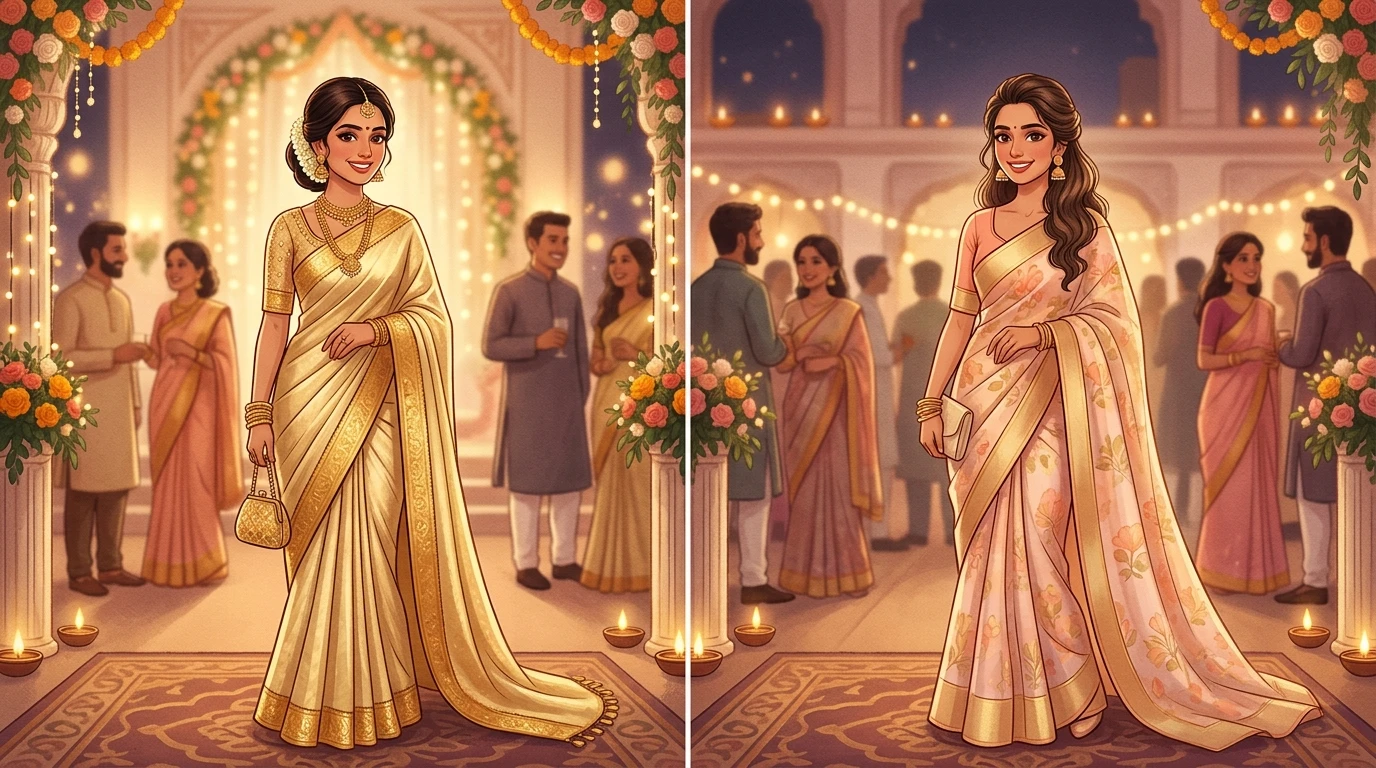
What is the real difference between tissue silk and organza?
The core difference between tissue and organza comes from how each fabric is woven. Tissue silk is a silk-based fabric interlaced with metallic yarns, while organza is a sheer, plain-woven fabric that trades richness for lightness and air.
According to a government textile overview on tissue cloth, tissue sarees are often woven with silk in the warp and zari in the weft. That metallic weft gives tissue its characteristic high sheen and ceremonial look, making it a favourite for weddings and receptions.
How tissue silk is woven
In many traditional tissues, especially Banarasi, the warp is pure silk and the weft is fine metallic yarn. This structure gives tissue silk a slightly heavier hand feel, along with a luminous, almost liquid shine.
Nymi Store’s editorial team notes that tissue silk sarees are slightly heavier because of zari weaving, but they reward you with defined pleats and a polished silhouette for events that run late into the night (Nymi saree fabric guide).
What makes organza distinct
Organza, on the other hand, is a plain-weave fabric that can be made from silk or synthetic yarns. Its open weave creates a stiff, transparent cloth that stands slightly away from the body instead of collapsing into soft folds.
SewGuide calls organza “highly breathable” with “minimal drape” that maintains stiffness, making it perfect for structured, voluminous silhouettes rather than fluid, clingy drapes (SewGuide organza properties).
How this shapes the overall vibe
Because tissue silk is more opaque, with internal structure from zari, it reads as rich, traditional and regal in person. Organza’s transparency and crispness, by contrast, feel ethereal, modern and slightly edgy, especially in pastel tones.
So for a tissue silk vs organza saree decision driven by visual vibe alone, tissue silk wins for classic luxury while organza wins for airy, fashion-forward glamour. Your personality and event mood will decide which side you lean toward.
How do tissue silk vs organza sarees look, drape and photograph?
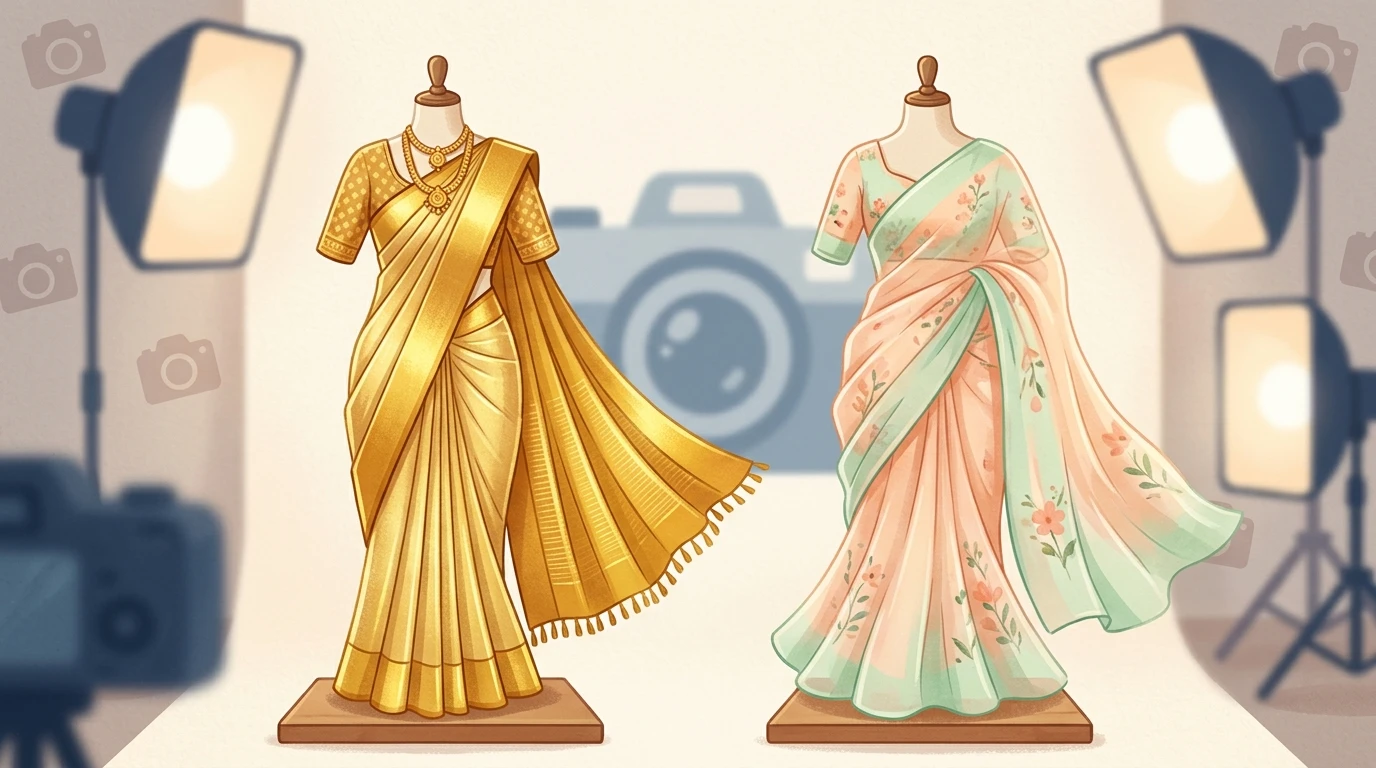
When we compare how a tissue silk vs organza saree behaves on the body and on camera, the differences become very clear. Tissue gives sculpted pleats and a bold pallu; organza offers volume and softness with a hint of transparency.
A 2025 comparison by Nymi highlights that tissue silk sarees are “slightly heavier because of zari” but hold sharper pleats and structure. Organza is “lightweight, sheer and crisp with a structured flow,” which means it stands away from the body rather than hugging every curve.
Drape and structure on the body
On the waist, tissue silk pleats sit close and stacked, almost like a sculpted panel. That structure makes it easier to achieve those razor-sharp, symmetrical pleats you see in reception photos, without the saree collapsing halfway through the event.
Organza’s stiffness gives volume, especially around the hips and at the pallu. It creates a beautiful outline, but if your drape is not pinned thoughtfully, it can puff or flare in ways you may not love from every angle.
How these sarees photograph
House of Banaras notes that tissue offers high sheen and more opacity, while organza is “medium sheen with higher transparency,” which determines how loud each looks under lights (House of Banaras spotlight).
Under reception lighting and flash, tissue silk gleams intensely and hides blouse and shapewear lines. Organza instead creates a soft, layered effect where the blouse and even shapewear might show through slightly, which some women find chic and others find distracting.
Best occasions for each drape style
For all-night receptions where every hug becomes a photo-op, our experience at Swarna by Sangisathi says tissue wins. Banarasi tissue, in particular, “holds its shape beautifully but doesn’t feel cardboard-stiff,” staying as put-together at 2 AM as at the varmala, as one expert notes.
For daytime or golden-hour outdoor shoots, organza looks magical. Its airiness catches the breeze, and the pallu can float in photos, making it ideal for brides who want editorial-style images rather than full-on traditional drama.
| Aspect | Tissue silk saree | Organza saree | Dimension winner |
|---|---|---|---|
| Construction | Silk with metallic zari, opaque | Sheer, crisp open weave | Tissue for richness |
| Drape | Structured, sharp pleats | Stiff, voluminous, minimal drape | Tissue for sculpted pleats |
| Sheen & transparency | High sheen, low transparency | Medium sheen, high transparency | Depends on preference |
| Comfort in heat | Moderate, better indoors | Very breathable, airy | Organza for summers |
| Body type flattery | Skims curves, smooths lines | Adds visual fullness | Tissue for curvy, organza for petite |
| Maintenance | Less snag-prone, structured | Can snag, shows creases | Tissue for durability |
Which saree fabric feels better in your climate and over long hours?
Comfort-wise, a tissue silk vs organza saree choice often comes down to your venue and how hot you usually feel. Organza wins in humid lawns and outdoor mandaps, while tissue shines in air-conditioned banquet halls and cooler evenings.
According to Smira’s summer saree guide, organza is “super lightweight, airy and breathable” and a must-have for hot-weather weddings (Smira summer fabrics). That open weave lets heat escape instead of trapping it like some heavier silks.
Breathability and heat
Silk organza, especially, feels like almost nothing on the skin while still looking festive. For scorching Indian afternoons or tropical destinations, that can be a blessing when you are layered in jewellery and hairpins already.
Tissue silk, by contrast, has both silk and metallic yarns, so it is not as airy. You will feel warmer in it outdoors, but in AC halls the fabric feels reassuring and luxurious instead of suffocating.
Comfort over long wedding hours
Organza’s biggest advantage is weight, or rather the lack of it. Your shoulders will thank you during long pheras or queueing up for photos, and you are less likely to feel dragged down by the drape.
The trade-off is that its crisp edges can feel a bit scratchy where the pallu or sleeve rubs the skin. Tissue silk feels smoother and more fluid against the body, though the slight weight can become noticeable if you are dancing non-stop.
Snags, creases and real-life performance
From our styling racks at Swarna by Sangisathi, we see that organza can snag more easily on stone jewellery or metal chair edges. It also shows hard crease lines if crushed in a suitcase or stored carelessly.
Tissue silk’s structure, especially in our Tales of Tissue collection, means pleats and pallu stay in place for hours. That is why many stylists call tissue the best saree fabric for reception nights in AC banquets, where you want to look exactly as sculpted at midnight as at entry.
Tissue saree or organza for petite, curvy and tall bodies?
The “tissue saree or organza for petite?” question comes up in almost every bridal consult we do. The honest answer is that both can work, but the drape and styling need to match your height, proportions and what you want to highlight.
Fabric guides agree that organza is lightweight, sheer and slightly stiff, adding visual fullness. Tissue silk skims the body more closely, offering structure without the same amount of volume.
For petite and straight figures
If you are petite or have a straighter frame, organza can actually be your friend. That extra volume at the hips and pallu can give the illusion of more curves and presence, especially in lighter, floating colours.
However, too much fabric can overwhelm a small frame. For a tissue silk vs organza saree choice when you are under 5’3, we recommend narrower pleats and reduced flare if you pick organza, or a lighter-toned tissue for a long, lean line.
For curvy and plus-size bodies
For fuller busts, broader shoulders or apple-shaped bodies, tissue silk often feels more forgiving. Its opacity smooths over shapewear lines and creates a clean column from waist to hem, especially when pleats are neatly stacked.
Organza’s transparency can highlight every layer worn underneath. If you prefer not to show blouse edges or shapewear outlines, the tissue silk vs organza saree decision tilts strongly towards tissue for big events where photos last a lifetime.
For tall frames and statement style
Taller women can play with both fabrics quite easily. A tall, lean frame can carry oversized organza pallus and dramatic borders without getting lost, while structured tissue can feel almost couture when styled with a statement blouse.
At Swarna by Sangisathi, we often pair our rich tissues with modern silhouettes like blazer-style blouses or structured corsets. That way, a tall bride gets both height and sculpted glamour without the outfit wearing her instead.
How do tissue silk and organza sarees compare for maintenance and durability?
If you are investing in a luxury piece, the tissue silk vs organza saree question also becomes about how long it will last. Here, tissue silk usually has the edge, especially when crafted carefully and stored well.
Both fabrics are delicate and deserve respect, but there are clear differences in how they handle repeated wear, embroidery weight and storage.
Day-to-day care and storage
Organza needs gentle handling. Because it is sheer and crisp, one snag on a ring or clutch can create pulls that are hard to disguise. It also creases sharply, so stuffing it into a suitcase between events is risky.
Tissue silk likes to lie flat or be loosely folded with soft muslin. It can develop creases, but those usually soften with gentle steaming. Our Tales of Tissue sarees are designed to hold their structure even after careful dry cleaning and multiple wears.
Longevity and heirloom potential
For many of our clients, especially international ones investing from the UK, USA or Australia, the question is, “Will this saree still feel special ten years from now?” With tissue silk, the answer is often yes, provided you store it away from moisture and sunlight.
Organza is more trend-driven and may not age as timelessly as a rich tissue. If you dream of passing your reception saree down, the difference between tissue and organza is stark: tissue silk, with its classic zari weave, is the more heirloom-friendly choice.
How should you wear and style tissue silk for receptions?
Once you choose a tissue silk vs organza saree route, styling makes all the difference. Tissue rewards clean pleats, smart blouse choices and the right jewellery scale so the fabric’s own sheen can breathe.
If you are leaning towards tissue for your reception, learning a few draping and styling tricks will help you get every bit of magic from the fabric.
Getting the pleats and pallu right
Tissue silk holds sharp pleats beautifully, which is why it is so photogenic. Focus on neat, slightly narrower pleats at the waist and a pallu that is either fully open or structured into broad, ironed folds for a regal feel.
We have shared detailed styling ideas and draping tips in our own how to wear tissue silk feature, which many brides use as a reference before their trials.
Letting zardosi and craftsmanship shine
One of tissue silk’s biggest strengths is how well it carries embroidery. Our karigars’ Lucknowi and Bhopali zardosi work sits crisply on tissue without warping the base, which is why our reception-ready Tales of Tissue sarees feel so sculpted.
If you love intricate handwork, the best saree fabric for reception looks that still feel luxurious is often tissue rather than organza. Heavy zardosi can weigh down organza or cause it to lose its airy character.
Frequently Asked Questions
What is the main difference between tissue silk and organza saree?
The main difference is construction and feel. Tissue silk uses silk with metallic zari yarns, giving high sheen, structure and opacity, while organza is a sheer, crisp fabric with an open weave that feels very light and airy. This changes drape, transparency, comfort in heat and how each photographs at events.
Which is better for receptions: tissue silk vs organza saree?
For most indoor receptions, tissue silk is usually better. Its slightly heavier, structured drape holds sharp pleats and a bold pallu, and the high sheen looks rich under artificial lights. Organza can work too, but it’s generally more suited to daytime, outdoor or summer functions where breathability matters more.
Is tissue saree or organza better for petite women?
Both can work for petite women, but in different ways. Organza adds volume and can create the illusion of more curves, especially with narrower pleats and minimal flare. A light-toned tissue saree, on the other hand, elongates the frame and offers structure without overwhelming a smaller height, especially when draped neatly.
Which fabric is more comfortable in hot weather, tissue silk or organza?
Organza is more comfortable in hot weather. Its open weave makes it extremely breathable, so heat escapes easily and the saree feels very light on the body. Tissue silk, with its silk and metallic yarns, feels richer but warmer, making it better for air-conditioned halls or evening events rather than peak summer afternoons.
Which fabric lasts longer and is easier to maintain, tissue silk or organza?
Tissue silk generally lasts longer and is easier to maintain with proper care. Its slightly heavier, structured weave is less prone to snags and handles embroidery weight well, making it more heirloom-friendly. Organza looks beautiful but is more delicate, can snag on jewellery, and shows sharp crease lines if stored or packed carelessly.
Which should you choose: tissue silk or organza saree for your next big event?
In the end, the tissue silk vs organza saree answer depends on your body, climate and celebration style. Tissue wins for richer sheen, opacity, structure and heirloom potential; organza wins for lightness, breathability and modern, floaty silhouettes.
Think of tissue silk as your go-to for indoor receptions, cocktails and engagements where you want high-shine drama and sculpted pleats. Organza is better for mehendi afternoons, poolside parties or destination weddings where heat and easy movement are the priority.
Quick decision checklist
Use this simple checklist to decide fast:
- Venue: AC banquet, ballroom, indoor hotel? → Lean tissue silk.
- Weather: Hot, humid, outdoor lawn? → Lean organza.
- Body type: Curvy, plus-size, busty? → Structured tissue.
- Body type: Petite, straight, loves volume? → Airy organza.
- Style: Love shimmer and regal drama? → Tissue.
- Style: Prefer soft-focus, editorial feel? → Organza.
When Tales of Tissue is your best friend
If you are the “reception queen” who wants that red-carpet entrance, our Tales of Tissue pieces are made exactly for you. They combine metallic tissue bases with meticulous zardosi, creating sarees that frame your waist and hold up under hundreds of photos.
For more inspiration on how tissue silk can anchor your wedding wardrobe, you can explore our ideas for tissue silk wedding outfits drawn directly from our clients’ celebrations across India and overseas.
Ready to choose your reception saree?
At Swarna by Sangisathi, we create every garment as made-to-order, with a 5–6 week timeline and global shipping to the UK, USA, Europe, Australia and the Middle East. Our karigars pour decades of skill into each piece, so your saree feels like wearable art.
If you are leaning toward tissue, explore our Tales of Tissue lineup and other handcrafted silhouettes on Swarna by Sangisathi. And if you are still torn between a tissue silk vs organza saree, reach out to us—our team will happily help you match the right fabric to your body, venue and dream photos.