

The difference between zari and zardozi is material versus method: zari primarily names metallic thread; zardozi names an embroidery tradition that can use it alongside other decorative materials, as Development Commissioner (Handicrafts) guidance and Craftmark’s embroidery guide explain. They are related, not competing alternatives. When you read a saree, shirt or blazer description, neither name alone proves precious-metal content, workmanship quality or how the garment should be cleaned.
Zari and zardozi: the difference at a glance
A garment can contain zari and feature zardozi. The distinction helps you understand both what goes into the decoration and how it is made.
| What you are comparing | Zari | Zardozi |
|---|---|---|
| Category | Primarily a metallic thread or yarn | An embroidery technique or tradition |
| Materials | Metallic components, sometimes combined with a core yarn; composition varies | Metallic threads or wires, potentially combined with silk threads, beads, sequins and other embellishments |
| How it is used | Woven into fabric or used in embroidery | Worked onto a fabric ground as embroidery |
| Surface appearance | Woven shimmer, patterned borders or embroidered lines | Often layered or raised decoration; relief depends on the design |
| Garment applications | Sarees, dupattas, lehengas and embroidered garments | Lehengas, sarees, dupattas, shirts and blazers |
| Details to confirm | Metal composition, exact technique, handmaking, quality, weight, price and care | Metal composition, handmaking provenance, quality, weight, price and care |
Here is how the material and technique work together:
- Zari in weaving: the thread becomes part of the fabric’s pattern.
- Zari in embroidery: the thread is used in zardozi or other embroidery.
- Other materials in zardozi: beads, sequins and additional elements can join the metallic threadwork.
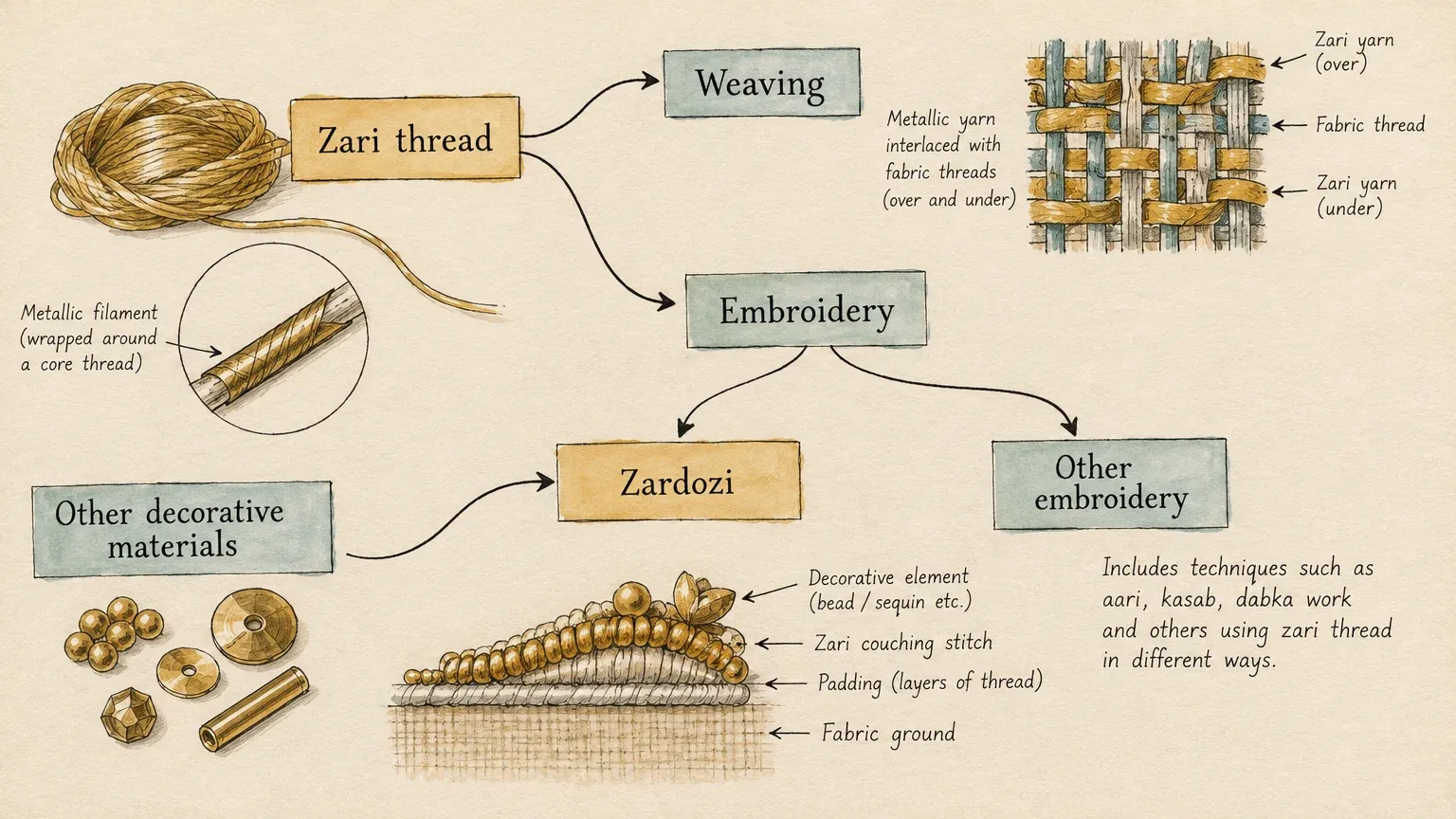
Zari also serves embroidery traditions beyond zardozi. Explore the wider craft family in our Indian embroidery types guide.
Metallic materials and the meaning of ‘zari work’
Gold-coloured and silver-coloured describe appearance, not metal content. According to the Development Commissioner’s zardozi reference, materials range from traditional gold and silver wires to later alternatives including copper, lurex and polyester.
You may encounter terms such as real zari, imitation zari and metallic or synthetic zari. Naming conventions differ between sellers and references, so ask what the thread contains rather than relying on the label. For example, the Textiles Committee’s Paithani study describes zari made with silk thread and twisted silver coated with gold.
Zari work usually means metallic decoration, but it does not tell you the exact technique. The Textile Research Centre’s definition includes both metal thread and embroidered decoration. The National Portal’s Budaun entry describes zardozi as a more elaborate form incorporating wires, silk and metallic threads. This overlap helps explain why garment descriptions sometimes use the terms loosely.
Zardozi is not automatically heavier or more expensive than zari work. Compare the actual fabric, embroidery coverage, materials and making method. If you are choosing zari thread, match its composition to the intended weave or embroidery.
The name, spellings and Indian craft centres
Zardozi is a Persian-derived name associated with gold embroidery, with a Persian craft connection described in the Development Commissioner’s Lucknow reference. Indian traditions have developed across multiple centres, including Budaun and Lucknow. The National Portal of India recognises Lucknow for its embroidery crafts.
Zardosi and zardozi are spellings of the same craft. Both appear in the Handicrafts and Carpet Sector Skill Council’s embroidery training guide.
We use Zardosi in our garment names. Meet Shambu Adhikary through our Artisan Stories: he is a third-generation artisan with 25 years of experience, working across Bhopal and Indore and specialising in zardosi, dabka and mirror work. A named maker and the region where a garment is made tell you more about its provenance than the craft’s historical associations alone.
From sarees and dupattas to embroidered shirts and blazers
Zari can form part of a saree’s woven design, while zardozi decorates the fabric through embroidery. The Textiles Committee’s Banaras study classifies zari brocades by their zari patterning. On lehengas and dupattas, metallic decoration may instead be embroidered, so look for a description that distinguishes woven work from embroidery.

On a contemporary shirt or embroidered blazer, zardozi can be used as a focused embellishment rather than covering the garment.
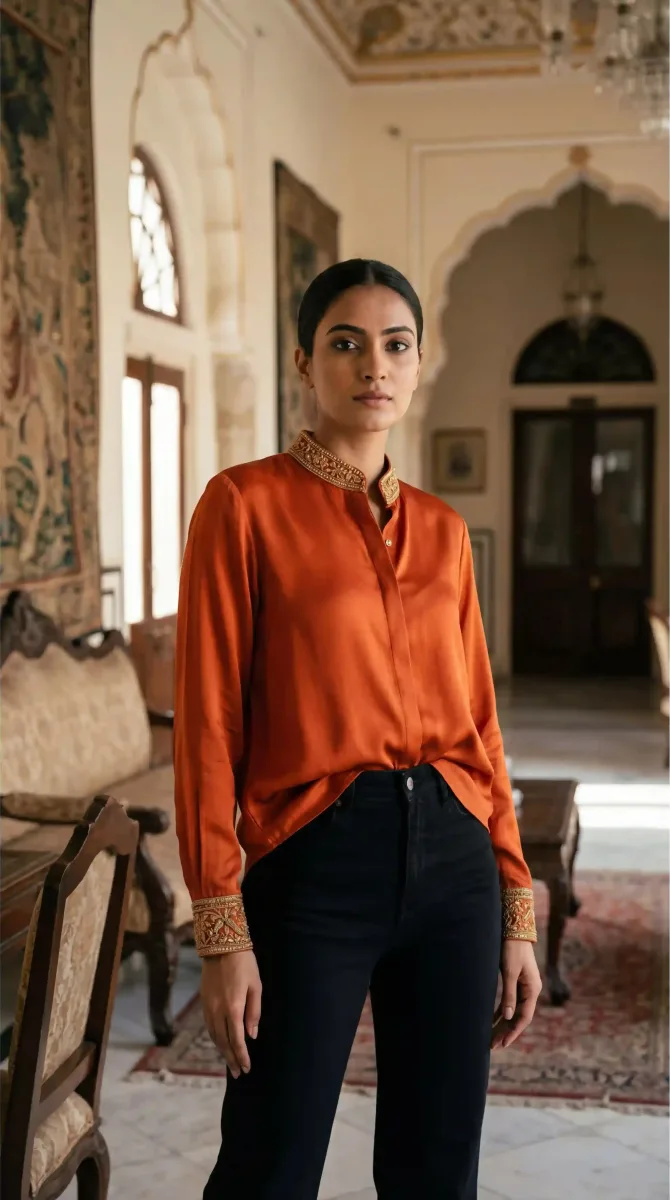
Our Off White Modal Silk Zardosi Work Shirt pairs modal silk with Zardosi hand embroidery by Shambu Adhikary. Made in Bhopal, it takes 30–33 artisan hours and requires dry cleaning only.
Raised decoration is a useful clue when recognising zardozi, but surface relief alone does not tell you what the threads contain or how the piece was made. Read the garment details for composition, artisan provenance and care.
Three description checks before you buy
Before buying, check embellishment composition, technique and provenance, and garment-specific care. These details help you look beyond the craft name and understand the piece you are choosing.
- What does the embellishment contain? Ask what the metallic threads or wires are made from.
- How and where was it made? Look for the craft, whether it is worked by hand or machine, the artisan and the making region.
- What care does this garment require? Check before buying, as GINETEX’s care-labelling guidance recommends. Follow the garment’s own care instructions.
Example: decoding a product description
A dupatta described simply as gold zari work tells you neither its metal composition nor whether the decoration is woven or embroidered. By contrast, our Orange Modal Silk Zardosi Work Shirt gives you the fabric, technique, maker, making region, artisan time and care:
| Garment detail | Orange Modal Silk Zardosi Work Shirt |
|---|---|
| Base fabric | Modal silk |
| Technique | Zardosi hand embroidery |
| Lead artisan and region | Shambu Adhikary, Bhopal |
| Artisan time | 38–42 hours |
| Care | Dry clean only |
When comparing garments, ask the same specific questions rather than treating gold colour as proof of gold content or a craft name as a quality guarantee.
Choose with the material, method and garment care in mind. Explore our Zardosi shirts and separates for traditional embroidery on contemporary silhouettes.