

The best winter wedding outfits for women combine a saree, lehenga, Anarkali, suit or tailored set suited to the function with removable layers for the venue. Velvet works well for evening celebrations. Our ZAIRA blazer set costs ₹12,500; our order policy allows 4–5 weeks before dispatch, plus transit time. Plan both warmth and timing: a Delhi lawn reception and a coastal indoor celebration need different layers.
Choose winter wedding outfits for women by venue first
Plan your layers around the time you will spend outdoors, including the entrance queue, photographs, ceremony seating and journey home.
| Venue and exposure | Base outfit and coverage | Underlayer space | Warm outer layer | Footwear |
|---|---|---|---|---|
| North-Indian outdoor evening | Covered suit, Anarkali, saree or lehenga with planned coverage | Allow room beneath fitted tops and sleeves | Coat or substantial shawl that works with shoulders and drapes | Closed flats or stable block heels |
| Indoor air-conditioned venue | Saree, tailored set or comfortable suit | Avoid a bulky base you cannot remove | Removable layer for air conditioning, arrivals and photographs | Comfortable shoes suited to the entrance surface |
| Milder coastal venue | Manageable saree, suit or separates | Keep coverage adjustable | Light removable layer; rain protection when needed | Secure soles suitable for a wet arrival |
| Daytime continuing after sunset | Silk outfit, suit or coordinated separates | Test any evening underlayer beforehand | Carry or arrange storage for a warmer layer | Shoes comfortable across both functions |
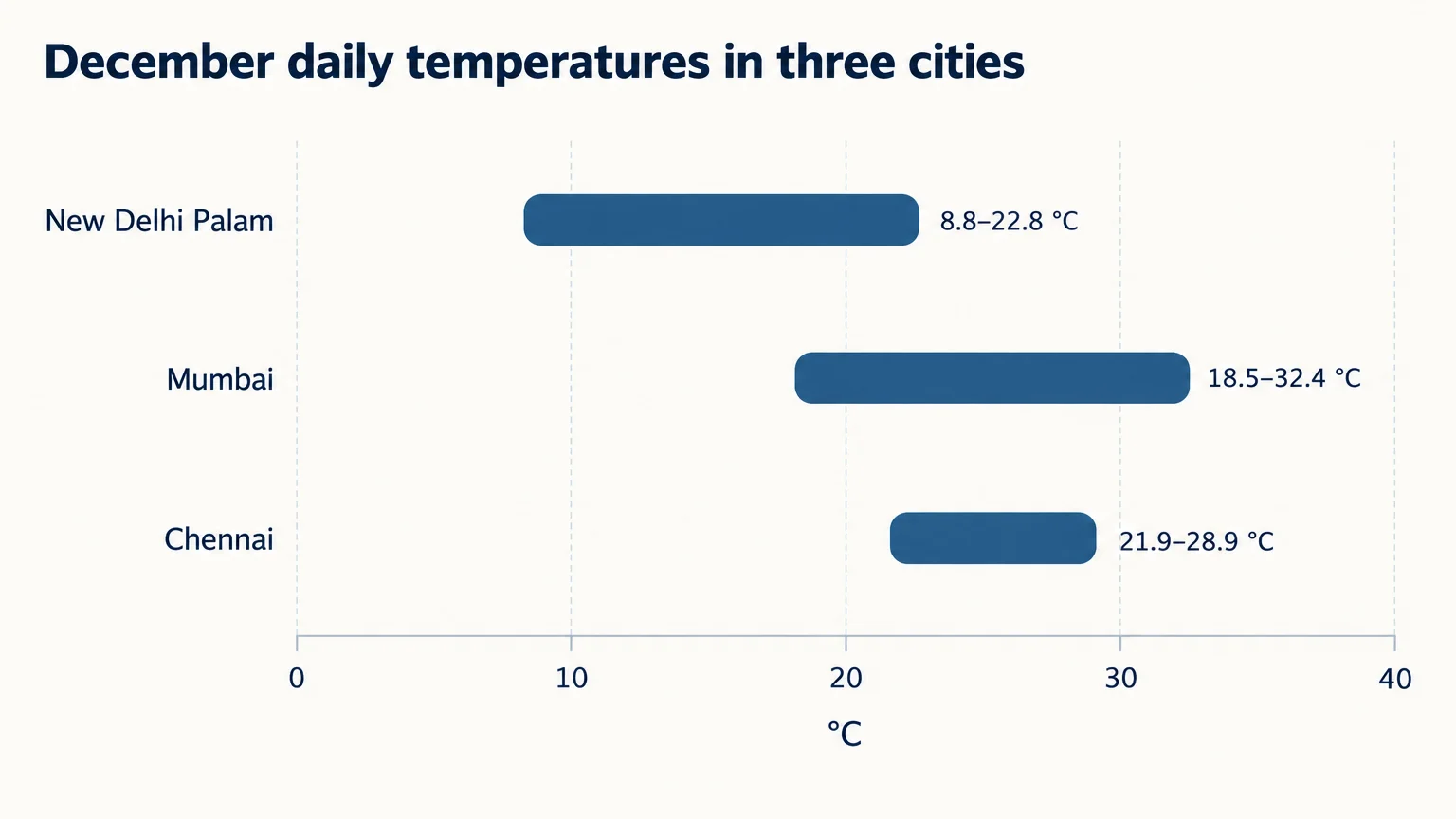
IMD’s 1981–2010 December averages show why regional planning matters:
| City | Mean daily minimum | Mean daily maximum |
|---|---|---|
| New Delhi Palam | 8.8°C | 22.8°C |
| Mumbai | 18.5°C | 32.4°C |
| Chennai | 21.9°C | 28.9°C |
Chennai’s mean December rainfall was 177.4 mm, so plan a protected arrival. Check the event-day forecast and venue arrangements as well as these historical averages.
For contemporary silhouettes, explore our Indian wedding guest outfits, then choose layers to suit the venue.
Match the silhouette to the function and dress code
Choose a silhouette that suits the occasion’s formality and lets you move comfortably.
- Sarees: adaptable draping, but check pleats, pallu control and blouse coverage beneath your layer.
- Lehengas: festive volume, with extra attention to exposed midriff, skirt bulk and hem clearance.
- Anarkalis and suits: continuous coverage; check that you can sit comfortably and manage the sleeves.
- Blazer sets: tailored occasionwear with rewear potential, provided the top gives you the coverage you want.
- Saree-blazer sets: contemporary ceremony or reception dressing with adaptable draping.
- Coordinated separates: flexible combinations, including jacket-dhoti looks, when the dress code permits.
| Function | Complete-look starting point | Layer plan | Shoes |
|---|---|---|---|
| Mehendi or haldi | Bright suit, small earrings, sleeves and drapes clear of activities | Removable shawl secured away from hands | Comfortable closed flats |
| Sangeet or cocktail | Plum velvet sharara or tailored set with restrained jewellery | Warm coat for exposed arrivals | Secure low block heels |
| Ceremony | Substantial silk saree or Anarkali with balanced jewellery | Shawl positioned around the pallu or neckline | Juttis or flats suited to the surface |
| Reception | Emerald saree-blazer set, velvet suit or lehenga with statement earrings | Warm layer for outdoor seating | Closed flats or stable heels |
Full-sleeve gowns, farshi salwars and layered Anarkalis are alternatives where the dress code allows. Denim-fusion separates belong at functions that welcome them; ordinary jeans are not an automatic wedding substitute.
Consider emerald, burgundy, navy, plum or antique gold at night and brighter colours by day. Let the invitation and hosts’ preferences guide your colour choice. To look festive without looking bridal, balance elaborate clothing with simpler jewellery and styling.
Inspect construction and test the complete layered fit
Fabric, coverage and removable layers
Judge warmth by the finished garment, not fabric alone. CBSE’s textile science textbook explains that velvet’s pile traps insulating air, but weight, lining, sleeves and exposed skin still affect comfort.
| Fabric | What to inspect | Layering decision |
|---|---|---|
| Velvet | Weight, lining, sleeve coverage and flexibility | Useful evening option; assess outdoor protection separately |
| Substantial silk or brocade | Actual thickness, lining and areas left exposed | Add removable warmth where needed |
| Chanderi | Weight, transparency and construction beneath it | Add warmth according to weight and coverage |
| Georgette | Lining, covered areas and sleeve construction | Can work indoors; plan additional outdoor layers |
| Net | The opaque garment’s weight and coverage | Assess warmth from the underlying outfit and outer layer |
An embroidered blazer, cape or light stole is occasionwear, not a substitute for a warm coat or substantial shawl at a cold venue. NIOSH’s layering guidance explains that layers improve insulation and can be removed to prevent overheating.
Try the coat or shawl with your neckline, pallu and shoulder work. Keep rough surfaces and closures clear of embellishment, and prioritise warmth over keeping every detail on display.
Measurements, movement and shoes
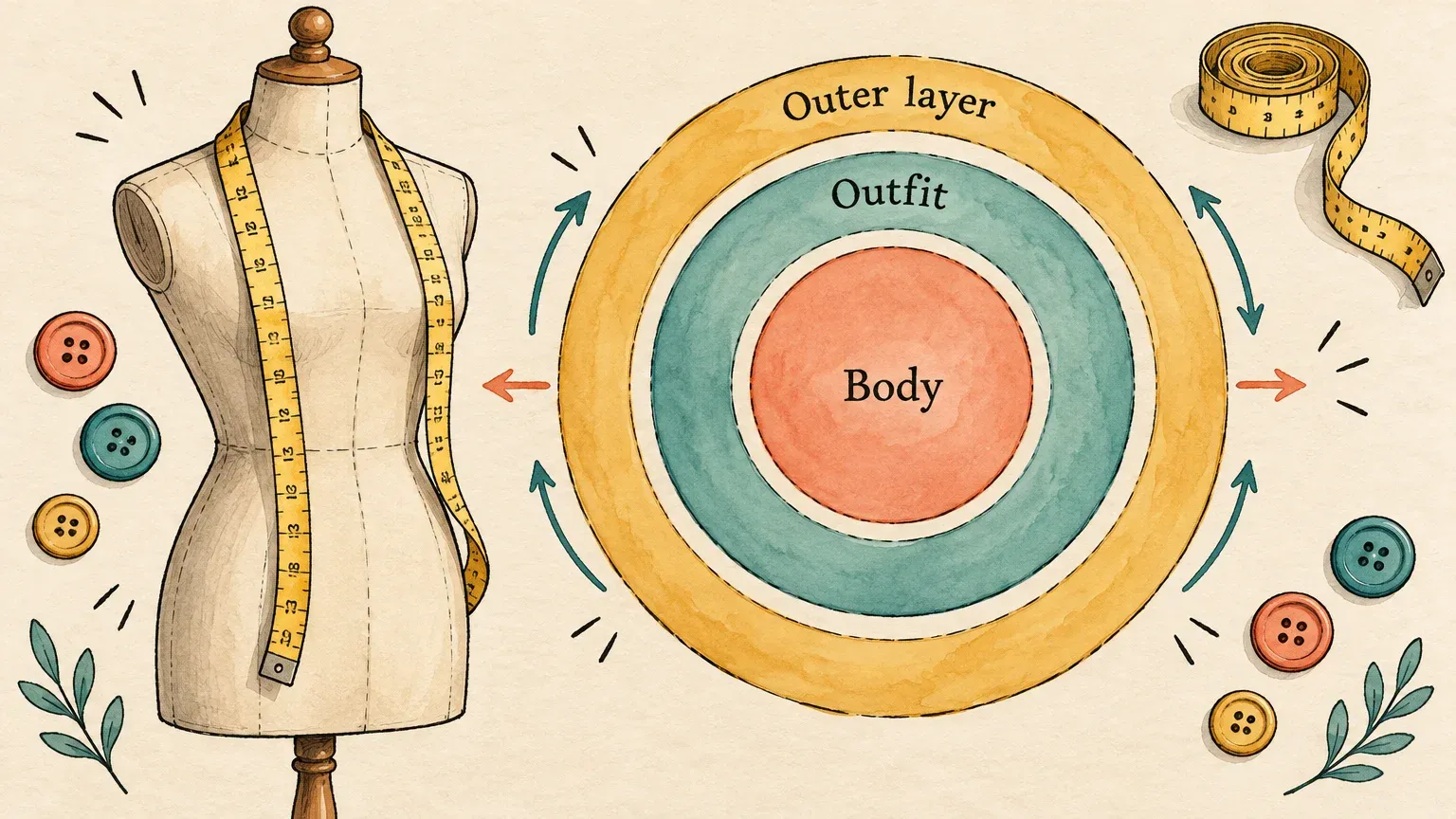
- Start with body measurements. Stand straight without bulky clothing, as Utah State University recommends. Note which layers the outer garment must accommodate.
- Compare finished-garment dimensions. INFLIBNET’s fit guidance defines ease as the difference between body and garment circumference. Allow enough ease for layering and movement.
- Check pressure points. Follow NIOS garment-fit guidance on shoulders, bust, waist, length and working fasteners. Measure the upper arm at its widest point, following the Knitting & Crochet Guild.
- Test everything together. Sit, reach forward, walk and fasten the coat. University of Tennessee guidance recommends extra room and sleeve length for outer garments. Reject binding sleeves or compressed embroidery.
For lawns, avoid narrow heels that sink. Choose stable soles, closed flats, suitable juttis or low block heels according to conditions. Set saree and skirt hems with the actual event shoes, and wear those shoes beforehand to assess comfort.
Compare the complete outfit cost, not just the listing price
Our ZAIRA brocade blazer set includes a Banarasi satin Kimkhab Meena brocade crop top and blazer, plus a crepe silk draped skirt. Its ₹12,500 price includes taxes. Weaver Imtiyaz Khatri contributes 57–63 artisan hours, and the ornamentation is woven, not embroidered.
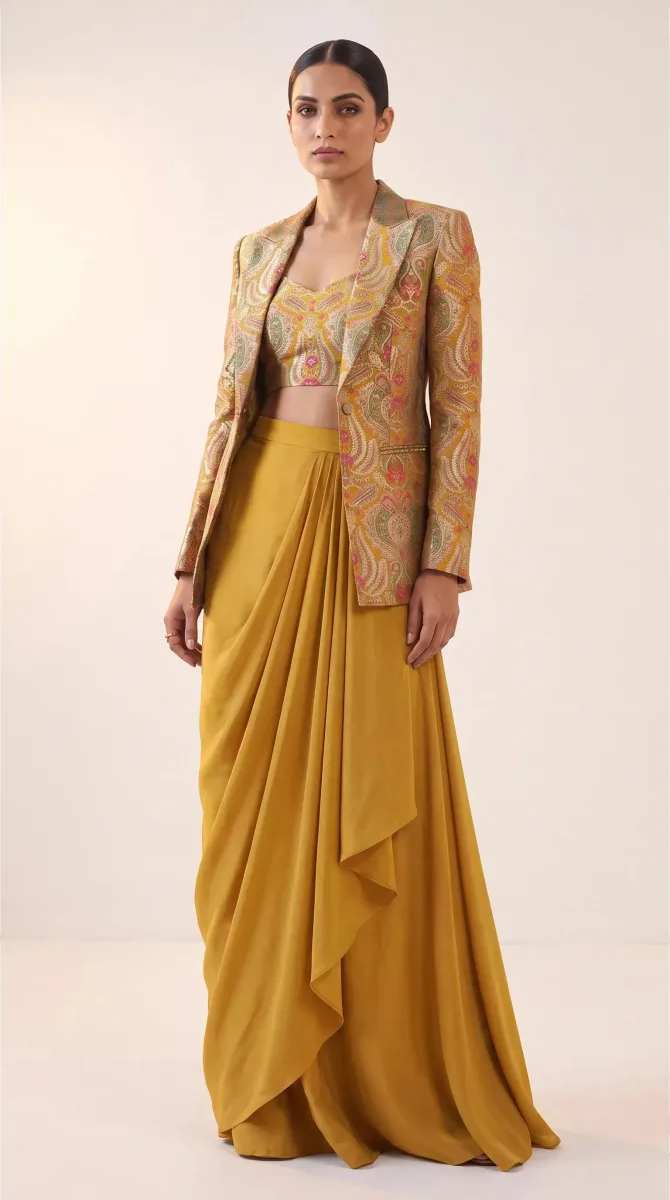
Compare it with our saree-blazer collection, paying attention to what each outfit includes:
| Outfit | Listed price |
|---|---|
| ZAIRA | ₹12,500 |
| KAAL | ₹15,250 |
| UMRAO | ₹16,500 |
| SHYAAM | ₹39,500 |
| ADHIRATRI | ₹39,500 |
| CHANDI | ₹39,500 |
Our Blue Modal Silk Zardosi Work Shirt costs ₹9,450 as a separate piece. When buying separates, budget for any missing top, blouse, saree, skirt, trousers or support pieces. Reuse existing accessories where they work, and consider care and rewear: ZAIRA is dry clean only.
Example: a complete-outfit budget
Assume you buy ZAIRA, reuse other components and accessories, and allow ₹4,000 for a coat, ₹2,000 for shoes and ₹500 for alterations. Domestic shipping is complimentary.
₹12,500 + ₹4,000 + ₹2,000 + ₹500 + ₹0 shipping = ₹19,000 total.
International shipping depends on weight and destination; include applicable import charges too. Review the final charge breakdown, cancellation terms and help available with fit. The Consumer Affairs e-commerce rules require inventory sellers to disclose compulsory and voluntary charges.
When should you order for a November or December 2026 wedding?
Allow 4–5 weeks before dispatch under our made-to-order policy, then add transit time to your destination, a complete try-on and any adjustments.
Example: two production calendars
Assume production starts on the dates below:
| Production start | After 4 weeks | After 5 weeks |
|---|---|---|
| 23 October 2026 | 20 November 2026 | 27 November 2026 |
| 30 October 2026 | 27 November 2026 | 4 December 2026 |
Work backwards from the wedding, allowing for production, shipping, a try-on and adjustments. A 30 October production start puts dispatch at 27 November–4 December, too late for an event before 27 November. Later events still need time for delivery and fitting. If the schedule does not work, consider ready-to-wear or an outfit you already own.
Our policy permits cancellation within 24 hours only before cutting begins. If we make a measurement error, the garment qualifies for a remake; incorrect customer-supplied measurements receive one complimentary alteration. Leave time for this work before the event.
Frequently asked questions
Is velvet suitable for an evening winter wedding?
Yes. Velvet suits evening celebrations, and its pile traps insulating air. Consider lining, coverage and outdoor layers alongside the fabric.
How should I layer a saree for a winter wedding?
Use a removable coat or substantial shawl suited to the venue. Test it with your blouse, pleats and pallu.
Does an embroidered blazer replace a warm coat?
No, not at a cold outdoor venue. Plan a warm coat or substantial shawl that fits comfortably over the embroidered blazer.
How can I look festive without looking bridal?
Balance elaborate occasionwear with simpler jewellery and styling. Let the invitation and hosts’ preferences guide your colours and embellishment.
Your final check before buying
- Does the outfit suit the function and invitation?
- Have you accounted for outdoor exposure and a removable warm layer?
- Can you sit, reach and walk comfortably in the complete outfit?
- Do the shoes, hem, total cost and arrival schedule work?
Choose your occasionwear and cold-weather protection together. Explore our handcrafted occasionwear for the celebration, then complete the look with practical layers.