

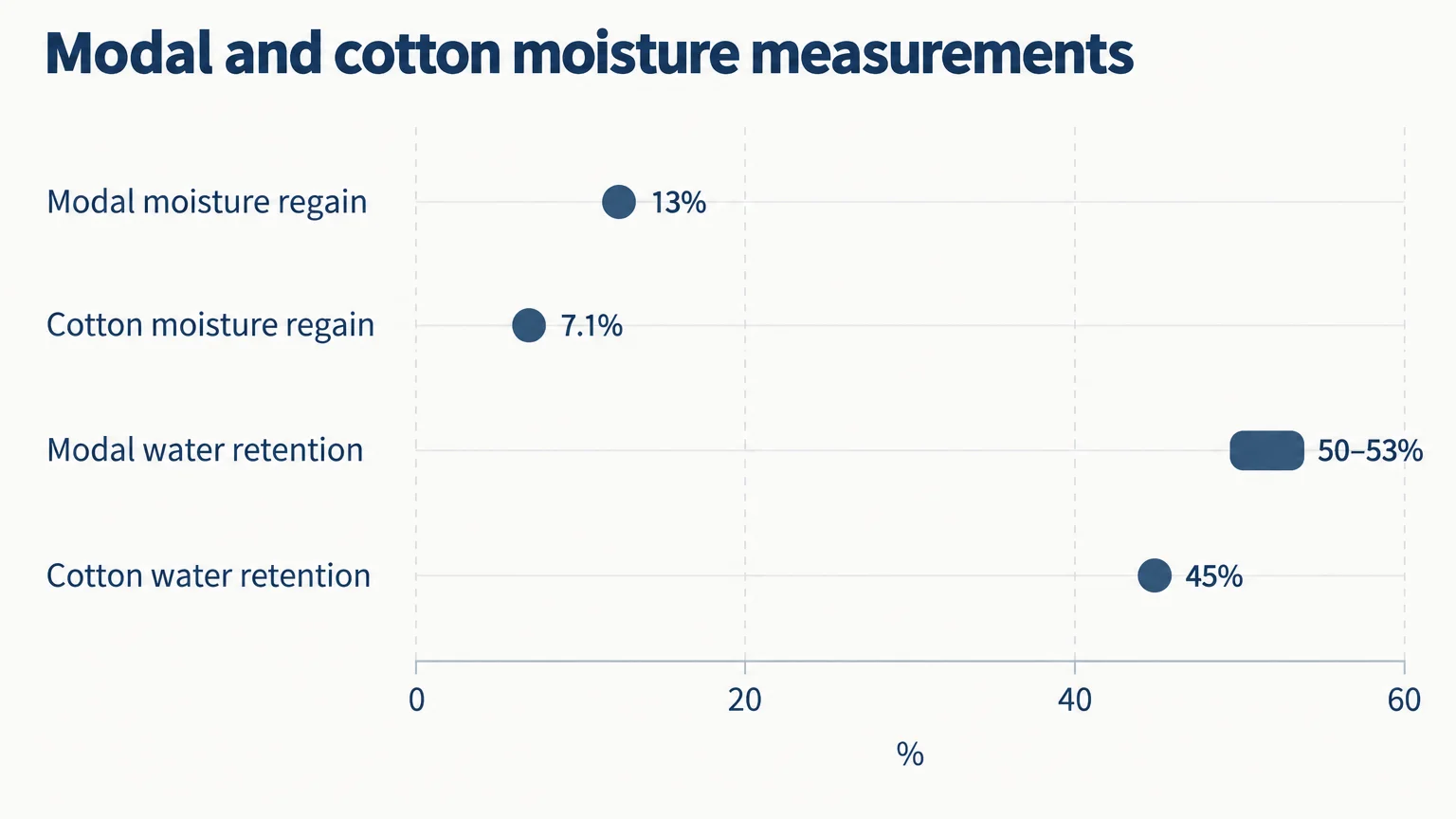
Choose modal for a smoother, fluid feel and cotton for a familiar, potentially crisper silhouette, then check whether the garment’s construction and care suit you. TENCEL’s fibre guide identifies its modal fibres as naturally soft and smooth. A Lenzinger Berichte comparison reports moisture regain of 13.0% for modal versus 7.1% for cotton. These figures measure moisture uptake, not cooling or drying speed. For festive clothing, the finished shirt’s fit, layers and care matter as much as its fibre name.
Modal vs cotton: the differences at a glance
Modal is not cotton. It is regenerated cellulose: plant cellulose is processed into new fibres, commonly from wood pulp. Lenzing’s modal overview identifies its TENCEL™ Modal as wood-derived. Cotton is a natural plant fibre that grows around the seeds of the cotton plant, as explained by CottonWorks’ fibre guide.
These are typical tendencies, not guarantees for every garment.
| Property | Modal | Cotton | What determines the result |
|---|---|---|---|
| Origin | Regenerated cellulose, commonly wood-derived | Natural cotton-plant fibre | Composition identifies fibres and blends |
| Softness | Typically smooth and soft | Crisp to very soft | Yarn, construction and finishing |
| Skin feel | Often smooth against the body | Familiar feel | Inside surfaces, seams and tags |
| Drape | Often fluid | Fluid or structured | Weave, knit and tailoring |
| Sheen | Can offer subtle sheen | Matte or lustrous | Construction and finish |
| Breathability | Depends on construction | Depends on construction | Porosity, weight, fit and layers |
| Moisture behaviour | Higher moisture regain | Lower moisture regain | Regain measures uptake; evaporation governs drying |
| Creasing | Depends on blend and finish | Can crease; treatments help | CottonWorks’ finishing guidance: suitable cotton treatments improve wrinkle resistance and shape retention |
| Shrinkage | Depends on construction | Depends on construction | CottonWorks’ shrinkage guidance: knits are more shrinkage-prone than wovens |
| Pilling | Depends on yarn and care | Depends on yarn and care | CottonWorks’ quality-testing guidance: laundering abrasion can cause pilling and colour changes |
| Colour retention | Depends on dyeing, finish and care | Depends on dyeing, finish and care | Follow the permitted cleaning and drying treatment rather than assuming either fibre tolerates the same wash |
| Maintenance | Home washing when permitted; specialist cleaning if dry clean only | Home washing when permitted; specialist cleaning if dry clean only | Embellishment can determine care in either fibre; budget for the specified treatment |
| Value | Compare purchase and cleaning costs against likely wears | Compare purchase and cleaning costs against likely wears | Cost per wear: purchase price plus expected cleaning costs, divided by realistic wears |
For more on occasionwear structure and drape, see tissue silk vs organza.
Softness, drape and the silhouette you want
Modal is a good starting point for a smooth, flowing shirt; a suitably constructed cotton woven can give you a more defined silhouette. Neither fibre limits you to one shape.
The TENCEL fibre brochure notes that modal blends can add drape and subtle sheen, qualities that suit softly falling separates and evening layers. Cotton can also feel supple, while tailoring and interfacing can give modal structure. Plain weave, twill, satin and knit constructions change both appearance and movement.
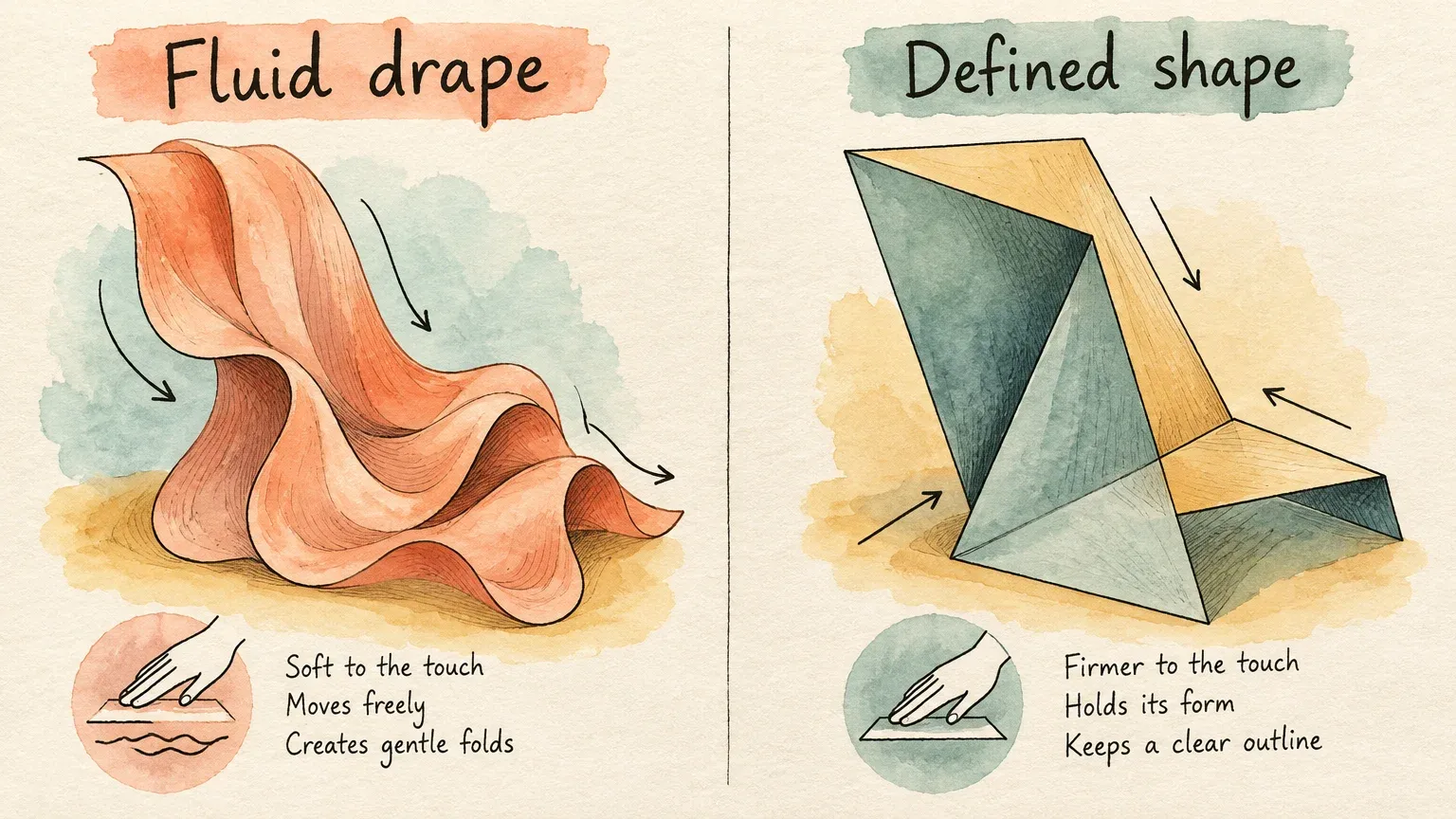
When trying a garment, lift your arms, sit down and check how it falls. Look at opacity and whether it needs another layer. Feel the inside seams, neckline and cuffs, not just the outer fabric. In childhood-eczema guidance, the American Academy of Dermatology notes that rubbing tags can irritate skin. A soft fabric alone does not ensure comfortable contact with your skin.
More absorbent does not mean faster drying
A more absorbent fabric does not necessarily dry faster. Drying depends on how readily the absorbed moisture evaporates.
- Breathability: how readily air and water vapour move through fabric.
- Absorption and moisture regain: absorption concerns taking up liquid; moisture regain measures moisture held relative to dry fibre mass.
- Wicking: movement of liquid through the material.
- Drying: loss of moisture through evaporation.
Modal is often described in retail guidance as approximately 50% more absorbent than cotton. That does not tell you how quickly a shirt will dry. The Lenzinger Berichte comparison distinguishes moisture regain from water retention, so compare the fibres within each measurement:
| Measurement | Fibre | Reported value |
|---|---|---|
| Moisture regain | Modal | 13.0% |
| Moisture regain | Cotton | 7.1% |
| Water retention | Modal | 50.0–53.0% |
| Water retention | Cotton | 45.0% |
CottonWorks’ TransDRY guidance says drying performance in these treated cotton fabrics varies with formulation, construction and finishing. An absorbent shirt can still stay damp when dense fabric, extra layers or humid air limit evaporation.
Choosing for Indian heat, humidity and indoor events
For hot weather, start with a lightweight, loose, porous garment in either fibre. The Maharashtra heatwave guidance specifically recommends lightweight, light-coloured, loose and porous cotton clothing.
| Situation | Fibre starting point | Construction to check | What to prioritise | Maintenance check |
|---|---|---|---|---|
| Warm daytime gathering in Delhi or Rajasthan | Lightweight cotton; modal can also work | Loose fit, porous weave, minimal layers | Ventilation over sheen | Check laundering and pressing instructions |
| Humid outdoor event in Mumbai or Kolkata | Either, if light and ventilated | Low bulk, relaxed fit, limited dense embroidery | Absorbency cannot overcome slow evaporation | Consider care after sweaty wear |
| Air-conditioned dinner | Modal for fluidity; cotton for definition | Comfortable lining, cuffs and optional jacket | The silhouette and layering you prefer | Allow for specialist care if specified |
| Repeated everyday wear | Either, with manageable care | Sound seams, comfortable fit, useful shape | What works with existing outfits | Compare cleaning effort and cost |
The CDC’s extreme-heat guidance explains that high humidity slows sweat evaporation. Its clothing and heat explanation also notes that thicker or less permeable clothing generally hampers heat exchange. Pair a soft, airy base fabric with light, permeable inner layers.
Read the whole garment: blends, lining and Zardosi
“Modal silk” describes a fabric; the composition label gives the fibre percentages. Another fibre in the blend can change sheen, drape and care requirements.
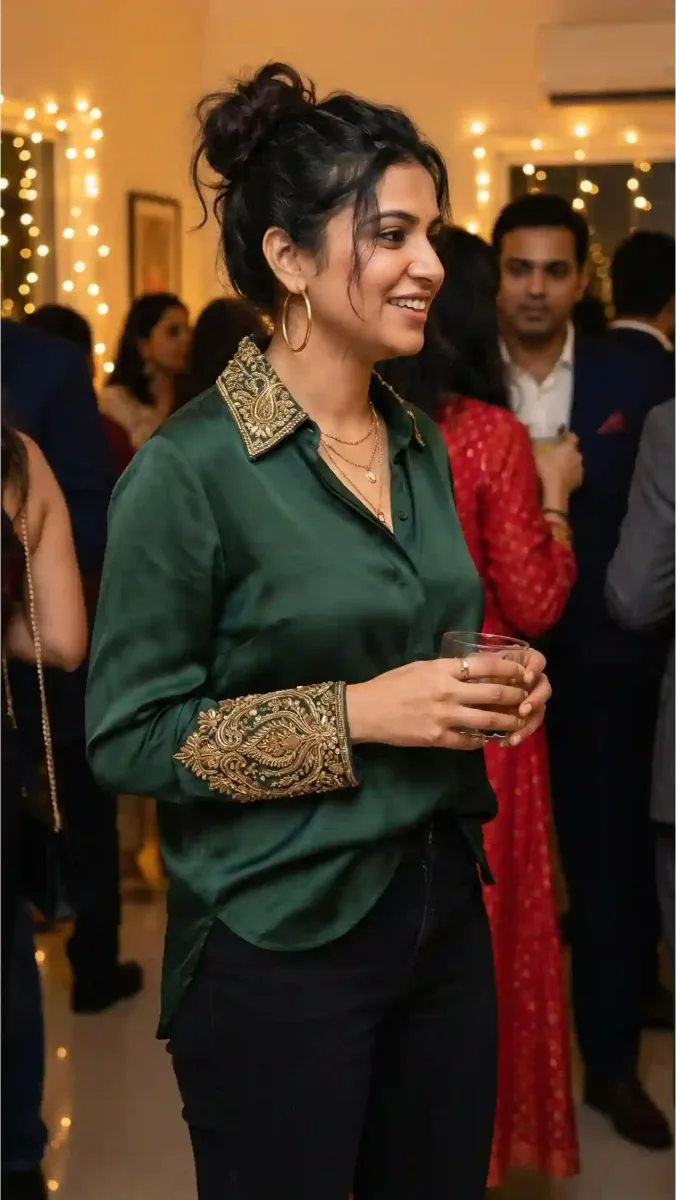
For any festive separate, examine the weave or knit, fabric weight, fit and internal construction. Lining adds another surface against your body. Interfacing, embroidery backing and dense surface work can add stiffness, bulk and weight in particular areas. Placement matters too: embroidery concentrated around a cuff behaves differently from extensive coverage across the torso.
A shirt from our collection
Our Green Modal Silk Zardosi Work Shirt is ₹7,750 inclusive of taxes. It is made in Modal Silk and requires dry cleaning only. Shambu Adhikary in Bhopal contributes 36–39 artisan hours of Zardosi hand embroidery.
We offer this shirt in XS–6XL and Custom Measurement, with made-to-order production in 4–5 weeks and fit and alteration support. When planning your fit, account for how you intend to move and layer the shirt. Weigh its craftsmanship and care requirements alongside the fabric’s feel.
Four checks before you buy
Use the same four checks for a plain garment and an embellished one:
- Outer composition: read the fibre names and percentages on the composition label.
- Inner layers: identify any lining and inspect how the inside feels.
- Surface work: note embroidery, backing, attachments and areas of concentrated weight.
- Garment care: read the complete cleaning, drying and pressing instructions.
GINETEX’s textile-care guidance considers colouring, finishes, accessories and applications when determining treatment. Its care-labelling principles say instructions reflect the most critical care aspect. Treat the label as instructions for the whole garment, not just its base fabric.
Repeat-wear value, care and responsible sourcing
Washing, shape and cost per wear
Neither fibre guarantees longer wear. Yarn quality, construction, stitching, finishing and care determine how a particular garment ages.
Consider the fabric’s construction and finish before choosing a cleaning routine. CottonWorks’ shrinkage guidance identifies knits as generally more shrinkage-prone than wovens, while its quality-testing guidance links laundering abrasion to fuzzing, pilling and colour changes. Follow the garment’s permitted cleaning and drying treatment. For creasing, look beyond the fibre name: CottonWorks’ PUREPRESS explanation shows that finishing can improve cotton’s wrinkle resistance and shape retention.
For our ₹7,750 Green shirt, weigh likely repeat wear and dry-cleaning costs alongside the craftsmanship. For either fibre, calculate cost per wear: (purchase price + expected cleaning costs) ÷ realistic wears.
Sourcing claims worth checking
Neither modal nor cotton is a universal sustainability winner. Textile Exchange’s cellulosics guidance says environmental impact depends substantially on how the source material is produced.
For modal, look for a named fibre supplier and documented forestry and processing practices. For cotton, examine cultivation and processing evidence. Conventional, organic and rainfed descriptions address different sourcing questions; consider finishing, garment longevity and care alongside them.
Frequently asked questions
Is modal cotton, or is modal 100% cotton?
No, modal is not cotton. Modal is regenerated cellulose, commonly made from wood pulp, while cotton grows on the cotton plant. A garment can contain both; its composition label gives the blend.
What are the disadvantages of modal fabric?
Modal’s fluid feel can be a drawback when you want a crisp, structured silhouette. Blends and embellishment can also increase maintenance demands.
Is modal or cotton better for Indian summer?
Lightweight, loose, porous cotton is a practical starting point for hot daytime wear, while a suitably constructed modal garment can also work. In humid weather, prioritise ventilation, low bulk and limited layering. Greater absorbency does not necessarily mean faster drying.
Can an embroidered modal shirt be washed like a plain cotton shirt?
Only if the finished garment’s care instructions permit it. Embroidery, backing, finishes and attachments can determine the cleaning method even when the base fabric is washable. Our Green Modal Silk Zardosi Work Shirt requires dry cleaning only.
Is either modal or cotton healthier or better for sensitive skin?
Neither fibre has a universal health or sensitive-skin advantage. Smooth fabric, comfortable seams, tags that do not rub and a suitable fit can matter as much as composition. Prioritise the surfaces that touch your skin and your own comfort.
Choose modal if / choose cotton if
| Choose modal if | Choose cotton if |
|---|---|
| You prefer a smooth, fluid feel and softly falling silhouette. | You prefer a familiar feel and potentially crisper silhouette. |
| The actual garment’s layers and care suit your occasion. | The actual garment’s construction and care suit regular wear. |
Choose the shirt or separate you will enjoy wearing and can comfortably maintain, rather than buying on fibre name alone. If a handcrafted festive shirt suits your plans, explore our modal silk Zardosi shirts.