

Choose a jumpsuit for a trouser-based occasion look when its torso fit and fastenings work for you. Choose a dress when you prefer a skirt silhouette or simpler restroom access. For our made-to-order pieces, allow 4–5 weeks before dispatch, plus transit, under our order policy.
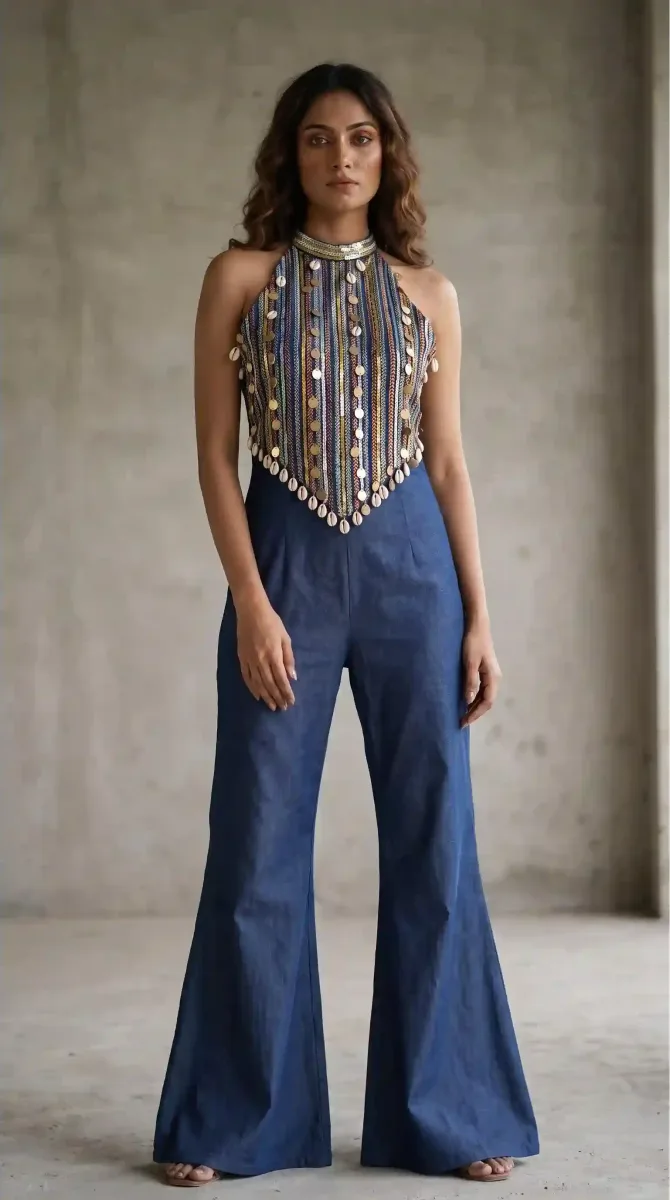
The distinction is construction: a jumpsuit has a connected bodice and trousers, as defined by Oxford Learner's Dictionaries, while a dress has a bodice and undivided skirt, as defined by Collins English Dictionary. Our threadworked denim jumpsuit and brocade corset midi dress offer both silhouettes. To choose between them, think through dinner, dancing, coverage and restroom visits.
Jumpsuit vs dress: the practical comparison
Both silhouettes offer one-and-done dressing without matching separate tops and bottoms. Neither automatically needs fewer accessories or less styling.
“Jumpsuit dress” is an inconsistent shopping term. Look at the lower half: separate trouser legs make it a jumpsuit, even when wide legs resemble a skirt. An undivided skirt makes it a dress.
| Consideration | Jumpsuit | Dress |
|---|---|---|
| Torso fit | Shoulder-to-crotch length connects the fit of bodice and trousers. | Bodice length matters; skirt shape determines room below the waist. |
| Waist placement | Must work with both bodice length and trouser rise. | Must suit the bodice and intended skirt position. |
| Closure access | Accessible fastenings matter for dressing and restroom visits. | May still need fastening assistance, especially with a fitted bodice. |
| Restroom practicality | Usually requires lowering the trouser section and managing the upper garment. | Often leaves the bodice in place; narrow skirts and layers need managing. |
| Walking | Check stride, leg width and trouser hems. | Check skirt width, openings and hem clearance. |
| Sitting | Check crotch pulling, waist pressure and neckline movement. | Check bodice pressure, skirt room and seated coverage. |
| Dancing | Separate leg coverage can help; torso restriction can limit movement. | A roomy skirt can move freely; a narrow cut may restrict steps. |
| Layering | Jackets and shawls must also work during restroom visits. | Layers must accommodate sleeves, bodice structure and neckline. |
| Alterations | Moving the waist can affect both bodice fit and rise. | Options depend on bodice structure, seams, lining and embellishment. |
Prefer independent top-and-bottom fit? Consider our Indian sets and co-ords.
Fit starts with measurements, not body-type rules
Choose by where you need room and how you want the garment to move. Overall height and a size label cannot describe how length is distributed between your torso and legs.
- For both: consider bust, natural waist, fullest hips, bodice length and intended finished length. Shoulder and sleeve measurements depend on the design.
- For a jumpsuit: shoulder-to-waist length, total torso length, seated crotch depth, rise, inseam and trouser ease work together.
- For a dress: consider bodice length and structure alongside waist placement, skirt room and seated coverage.
New Mexico State University's pants measurement guide measures crotch depth while seated, from the waist to the flat sitting surface. Its bodice fitting guide measures front bodice length from the neckline at the shoulder seam, over the bust, to the waist. Circumference measurements alone cannot capture these lengths.
Our Threadwork Halter Neck Jumpsuit has a regular fit and a 57-inch full length; it includes the jumpsuit only. That length needs to work with your proportions and intended shoes.
Test sitting, dancing and restroom access
A dress often lets you keep the bodice in place during restroom visits. A jumpsuit may require more undressing and, as Vogue India's practical guide notes, assistance getting it back on.
Try these checks with either silhouette:
- Sit as you would through dinner. Check waist pressure, bodice comfort, crotch pulling and neckline movement.
- Reach and operate the fastenings. Make sure you can dress independently.
- Rehearse the restroom sequence. Manage sleeves, jacket, shawl and loose fabric without letting handwork touch the floor.
- Walk and climb a step. Check stride and whether shoes catch the trouser or skirt hem.
- Raise both arms and dance. Watch for neckline exposure, bodice shifting and pulling at the waist or crotch.
- Repeat with your event essentials. Wear the intended foundation garments and shoes, as New Mexico State University's garment hemming guide recommends when setting length.
A loose-looking cut is not enough: you need room to move. New Mexico State University's trouser fitting guide explains that comfort ease varies with style, fabric and how clothing is worn.
Fabric, lining and layers can change the verdict
Weight, lining, drape and construction can matter more than whether the outfit has trousers or a skirt. Fabric names such as denim and silk tell you little on their own about softness, stretch or all-evening comfort.
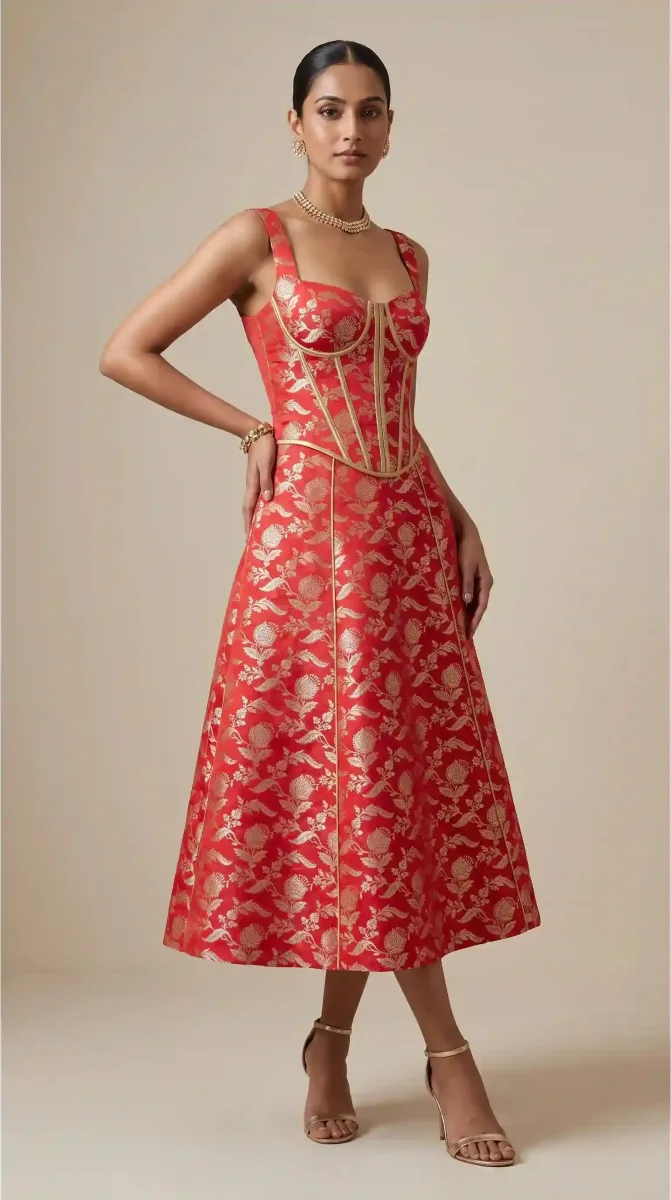
We use 5 oz cotton denim with cotton lining, threadwork and laces in our jumpsuit. Our Chanderi Brocade Corset Midi Dress uses cotton-silk Chanderi brocade with crepe lining, a structured corset bodice and a softly flared midi skirt. Both are dry clean only.
Assess a lined garment as a complete outfit, and notice where embroidery or lace meets your arms, bag strap and jewellery. Smooth jewellery and unobtrusive bag hardware are less likely to catch delicate work.
- Cotton-silk brocade and a structured bodice: choose this construction for a dressier cocktail evening, then check seated ease through dinner.
- Threadworked cotton denim: choose it for a relaxed function whose dress code welcomes denim, then check torso movement when sitting and dancing.
- Warm outdoor events: prioritise the combined weight of fabric and lining, comfortable room to move and your preferred coverage.
- Air-conditioned venues or winter evenings: allow room for a removable jacket or shawl. Loose sleeves can be awkward under a fitted jacket, as the CBSE fashion studies textbook explains.
- Monsoon arrivals: prioritise clear hems and secure footwear.
Check neckline coverage with the layer in place, then repeat the restroom sequence. A shawl that needs constant holding can make an otherwise convenient outfit awkward.
Choose for the celebration, not just the look
A jumpsuit can be dressy enough for an Indian cocktail evening or wedding function when its fabric, finish and styling meet the host's dress code. Save denim for invitations that welcome it.
| Celebration | Choose a jumpsuit when | Choose a dress when | What could change your choice |
|---|---|---|---|
| Cocktail evening | You want a trouser-led look and can sit and dance comfortably. | You prefer a skirt silhouette or simpler restroom access. | Formality, neckline coverage or fastening assistance. |
| Family celebration | Hosting and moving between tables feel easy in the fitted torso. | A comfortable skirt and straightforward restroom sequence take priority. | Waist pressure during meals, sleeves or coverage preferences. |
| Relaxed wedding function | The dress code welcomes it and the cut allows dancing. | You enjoy skirt movement and the hem suits the venue. | Outdoor terrain, long seated periods and restroom facilities. |
For standing and walking, try secure flats or block heels, then set the hem with that exact pair. Earrings can add an occasionwear finish without a necklace competing with a halter neckline. Keep styling secondary to movement, coverage and snag-free accessories.
Plan measurements and delivery before you order
Confirm event-date feasibility before purchase, allowing time for production, transit and a proper try-on.
- Submit your measurements. We provide a personal measurement check.
- Use the consultation. A complimentary WhatsApp video fit consultation helps with taking measurements and discussing fit preferences.
- Plan beyond production. Leave separate time for transit, a proper try-on and any adjustments.
We provide a remake for measurement errors on our side and one complimentary alteration when incorrect customer measurements caused the fit issue. Coordinate any alteration logistics with us around your event schedule.
Frequently asked questions
What is the difference between a jumpsuit and a pantsuit?
A jumpsuit connects the upper garment and trousers in one piece; a pantsuit has a separate jacket and trousers. A pantsuit lets you choose or alter the upper and lower pieces independently, while a jumpsuit needs a comfortable fit through the connected torso.
How is a romper different from a dress?
A romper combines a top and shorts in one garment, while a dress has an undivided skirt. A jumpsuit has attached trousers rather than shorts, although wide trouser legs can sometimes resemble a skirt.
Can a man wear a jumpsuit?
Yes, a man can wear a jumpsuit. Choose a design that fits comfortably through the shoulders, torso, hips and rise, and check that its finish suits the occasion's dress code.
Choose a jumpsuit if / choose a dress if
Choose a jumpsuit if trousers are your priority and the connected torso passes your sitting and movement checks. Choose a dress if you prefer skirt movement and want to keep the bodice in place during restroom visits. With either, make sure you can manage the fastenings, hem and layers comfortably.
Explore our handcrafted occasionwear with your dress code, fit priorities and event date in mind.